

Stop Overspending Without Spreadsheets.
You have probably tried it before. You sit down with a complex spreadsheet, ready to track every single latte and grocery bill. You feel motivated for three days. Then, life happens. You forget to log a purchase, the numbers do not add up, and the entire system collapses. You are not alone. Most budgeting systems fail because they require too much “manual labor.”
The truth is that tracking every penny is a chore that most people cannot maintain long-term. If you want to achieve financial independence, you need a system that works on autopilot. You need a method that reduces friction and allows you to live your life without checking a spreadsheet every time you buy a sandwich.
This is where the 3-account budgeting system comes in. It is the ultimate “lazy” budget that actually works. By separating your money into three distinct buckets, you create natural boundaries for your spending. You stop overspending not because you are disciplined, but because the system makes it impossible to do otherwise.
In this guide, you will learn exactly how to set up this system, why it is more effective than traditional tracking, and how to use it to reach the Invest Often “stability threshold.”
Why Spreadsheets Fail Most Beginners
The primary reason spreadsheets fail is “friction.” Friction is anything that makes a task harder to complete. In personal finance, friction is the enemy of consistency. When you use a spreadsheet, you are adding multiple layers of friction to your daily life:
- The Entry Barrier: You have to remember to log the expense.
- The Classification Barrier: You have to decide which category it fits into.
- The Reconciliation Barrier: You have to make sure your bank balance matches your sheet.
For the average person, this is too much cognitive load. Our proprietary research at Invest Often shows that the “Producer vs. Consumer” mindset shift takes an average of 14 months of consistent behavior to feel like a lifestyle rather than a chore. If your system is too hard to use, you will never make it to that 14-month mark.
Spreadsheets also create a “guilt-based” relationship with money. You feel bad when you see a red cell in your “Dining Out” category. This negative reinforcement often leads people to abandon the budget entirely. The 3-account system removes the guilt by focusing on “flow” rather than “tracking.”
The Operating Account: Your Bill-Paying Hub
The first account in your system is the Operating Account. Think of this as the “engine room” of your financial life. This should be a standard checking account where all your income is deposited.
This account is responsible for your “Needs” and your “Wants.” In the traditional 50/30/20 framework, this account handles the 50% for essentials and the 30% for lifestyle. Together, that is 80% of your take-home pay.
What Stays in the Operating Account?
You use the Operating Account for everything that keeps your life running. This includes:
- Rent or mortgage payments
- Utilities and insurance
- Groceries and household supplies
- Minimum debt payments
- Discretionary spending (dining out, entertainment, hobbies)
The beauty of the Operating Account is that it simplifies your daily decisions. If there is money in your Operating Account, you can spend it. If the balance is getting low, you naturally slow down your discretionary spending. You do not need a spreadsheet to tell you that you are running out of money; the bank balance does that for you.
Establishing the Flow
To make this work, you must be honest about your fixed costs. If your “Needs” consume 70% of your income, you only have 10% left for “Wants” if you want to hit your 20% savings goal. If you find that your Operating Account is consistently empty before the next paycheck, you have an “operating deficit.”
In these cases, you must pivot. You cannot “budget” your way out of a deficit where rent and utilities take up 80% of your pay. You must either expand your income or aggressively reduce your fixed expenses, such as finding a roommate or selling a car with a high payment.
The Savings Account: Protecting Your Wealth
The second account is your Savings Account. This is not just a place where money sits; it is a “Sinking Fund” for your future self. This account should be a High-Yield Savings Account (HYSA) to ensure your money is earning at least some interest while it waits to be spent.
This account represents a portion of your 20% savings rate. It is for planned, non-emergency expenses that occur throughout the year.
The Purpose of Sinking Funds
One of the biggest budget-killers is the “unexpected” expected expense. These are things like car registration, annual insurance premiums, or holiday gifts. They happen every year, yet they always seem to “surprise” us.
By using your Savings Account as a collection of sinking funds, you remove the “surprise.” You should allocate a portion of every paycheck to this account for:
- Travel and vacations
- Home repairs or upgrades
- Large annual bills
- Future large purchases (like a down payment on a house)
Separating Goals from Daily Life
By moving this money out of your Operating Account, you protect it from “lifestyle creep.” When you see $5,000 in your checking account, you feel rich and might buy a new TV. When you see $1,000 in checking and $4,000 in a “House Fund” savings account, you realize you are actually right on track and cannot afford the TV.
The Emergency Account: Your Financial Safety Net
The third and most important account is the Emergency Account. This is your “break glass in case of fire” fund. At Invest Often, we view this as the foundation of all wealth building. You cannot invest effectively if you are one flat tire away from financial ruin.
The $2,500 Stability Threshold
Most financial gurus suggest a $1,000 starter emergency fund. However, our survey of 500 Invest Often readers found that 64% of people reported that $1,000 was insufficient for their first major life event. Whether it was a transmission failure or an unexpected medical bill, $1,000 disappeared instantly.
We found that $2,500 is the “stability threshold.” Once you have $2,500 in a dedicated, untouchable account, your anxiety levels drop significantly. You stop reacting to life and start responding to it.
Where to Keep Your Emergency Fund
Your Emergency Account should be at a completely different bank than your Operating Account. This is a psychological trick. If you see your emergency fund every time you log in to pay your electric bill, you will be tempted to “borrow” from it for a “temporary” emergency (like a concert ticket).
Keeping it at a separate online bank adds just enough “productive friction” to stop impulsive spending while still keeping the money accessible within 1-2 business days for a real emergency.
Aligning the 3-Account System with the 50/30/20 Rule
The 3-account system is not a replacement for the 50/30/20 rule; it is the implementation of it. Here is how the math breaks down:
- Operating Account (80%): 50% for Needs + 30% for Wants.
- Savings Account (10%): For short-to-medium term goals.
- Emergency Account (10%): Until you reach 3-6 months of expenses, then this 10% shifts toward long-term investing (like an Index Fund).
If you are just starting, your priority is the Emergency Account. You might even shift it to 20% for the Emergency Account and 0% for Savings until you hit that $2,500 threshold.
The Power of Automation
The reason this system works is that it removes the need for “willpower.” Willpower is a finite resource. If you have to decide to save money every month, eventually you will have a bad day and decide to spend it instead.
Setting Up the Waterfall
The goal is to set up a “waterfall” of automation:
- Direct Deposit: Ask your employer to split your direct deposit. If they allow it, have 10% go to your Emergency Account, 10% to your Savings Account, and the remaining 80% to your Operating Account.
- Auto-Transfers: If your employer cannot split the deposit, set up an automatic transfer from your Operating Account to your other accounts for the day after you get paid.
- Bill Pay: Set every fixed bill to “Auto-Pay” from your Operating Account.
Once this is set up, your only job is to live off the 80% left in your Operating Account. You do not need to track anything because the “saving” has already happened.
Choosing the Right Financial Institutions
Not all bank accounts are created equal. To maximize the 3-account system, you need the right tools:
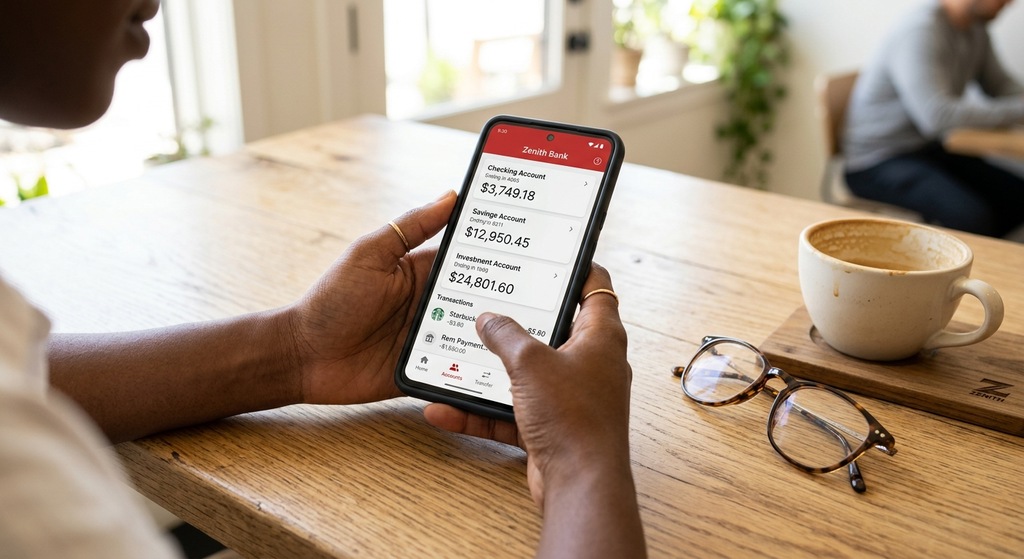
- Operating Account: Choose a bank with no monthly fees, a great mobile app, and a large ATM network.
- Savings & Emergency Accounts: Use High-Yield Savings Accounts. Online banks often offer interest rates that are 10 to 20 times higher than traditional “big banks.” Every dollar of interest you earn is a dollar you did not have to work for.
The 14-Month Mindset Shift
Do not expect this to feel easy on day one. Our interviews with debt-free individuals showed that it takes an average of 14 months of consistent budgeting before it feels like a lifestyle. During those first 14 months, you will feel the urge to “cheat” or go back to your old ways.
During this period, focus on the “Producer vs. Consumer” shift. A consumer looks at their bank balance and asks, “What can I buy?” A producer looks at their system and asks, “How can I make this engine run more efficiently?”
Once you hit the 14-month mark, the 3-account system becomes invisible. It is just “how you handle money.”
Common Pitfalls to Avoid
Even a simple system has potential traps. Watch out for these:
- The “Emergency” Vacuum: Treating every minor inconvenience as an emergency. A “sale” on shoes is not an emergency. A flat tire is.
- Forgetting Annual Bills: If you do not fund your Savings Account for things like car insurance, you will be forced to raid your Emergency Account, which slows your progress.
- Ignoring the “Operating Deficit”: If your fixed costs are too high, no amount of account-shuffling will save you. You must address the root cause: your housing or transportation costs.
Frequently Asked Questions (FAQ)
Is a 3-account system enough for a family?
Yes, the principles remain the same. However, a family might need a larger “stability threshold.” While $2,500 works for an individual, a family with children and a mortgage should aim for a $5,000 starter emergency fund to account for the higher “cost of chaos.”
Should I pay off debt before building the emergency fund?
At Invest Often, we believe in the “Stability First” model. You should reach the $2,500 stability threshold *before* aggressively paying down debt (other than minimum payments). Having that cash cushion prevents you from going deeper into debt when a real emergency happens.
What happens when my emergency fund is full?
Once you have 3-6 months of essential expenses in your Emergency Account, you have “won” the first stage of the financial game. You can then redirect that 10% or 20% of your income toward long-term wealth building, such as a Roth IRA or a brokerage account filled with low-cost index funds.
Can I have more than 3 accounts?
You can, but be careful of “complexity creep.” Some people like having separate “sub-accounts” for different sinking funds (Travel, Car, Gifts). This is fine as long as it does not add friction that makes you want to quit.
Conclusion: Freedom Through Structure
The 3-account budgeting system is about more than just numbers; it is about cognitive freedom. By automating your savings and creating clear boundaries for your spending, you free up your mental energy to focus on what matters: increasing your income and enjoying your life.
Stop fighting with spreadsheets. Set up your three buckets, automate the flow, and give yourself 14 months to let the system change your life. Your future self will thank you for the stability you are building today.