
Investing in real estate has long been a primary vehicle for building long-term wealth; however, many aspiring investors find themselves limited by the high prices or low cap rates in their local markets. If you live in a high-cost area like San Francisco or New York, the idea of “buying your backyard” might feel impossible. This is where out of state real estate investing becomes a game-changer. By looking beyond your immediate geographic area, you can find markets that offer better cash flow, lower entry prices, and stronger fundamental growth. But you must realize that investing from a distance is not the same as buying down the street. It requires a systematic approach, a shift in mindset, and a commitment to data over emotion. In this guide, we will walk through the exact steps to analyze a property from thousands of miles away, ensuring you build a resilient, cash-flowing portfolio that aligns with the Invest Often philosophy.
Building Your Out-of-State Team First
When you are investing out of state, your team is your eyes and ears on the ground. You cannot simply drive by the property to check on a renovation or verify if a tenant is taking care of the lawn. Therefore, the first step in out of state real estate investing is not finding a house; it is finding the right people. A common mistake novices make is falling in love with a property they found on a listing site before they have a single contact in that city. This is a recipe for disaster. You need a boots-on-the-ground infrastructure that you can trust implicitly.
Your core team should consist of four key players: a investor-friendly real estate agent, a high-quality property manager, a reliable contractor, and a thorough home inspector. The agent is your primary source for deal flow and neighborhood nuance; they should understand that you are looking for an investment, not a personal residence. The property manager is perhaps the most critical member, as they will handle the daily operations that determine your long-term ROI. Before you buy, have your property manager walk through the deal. They will give you a realistic rent estimate and point out potential management headaches that an agent might gloss over.
Trust but verify is the mantra of the remote investor. Use local real estate investment associations (REIAs) and online forums to vet your team members. Ask for referrals from other out-of-state investors who have successful portfolios in that specific market. Remember, you are building a business, and these team members are your “department heads.” If one member of the team is weak, the entire structure is at risk. Take the time to interview multiple candidates and ensure they align with your “debt-free” or “cash-flow first” goals. Once you have a trusted team, the process of analyzing individual deals becomes much faster and more accurate.
The Core Metrics: Cap Rate vs. Cash-on-Cash Return
Once your team is in place, you can begin the quantitative analysis of specific properties. In out of state real estate investing, you must let the numbers do the talking. While a house might look beautiful in photos, its beauty is irrelevant if the math doesn’t work. There are two primary metrics you should use to vet any potential rental: the Capitalization Rate (Cap Rate) and the Cash-on-Cash Return. Understanding the difference between these two is essential for making an informed decision.
The Cap Rate is a measure of the property’s natural profitability, independent of how it is financed. It is calculated by taking the Net Operating Income (NOI) and dividing it by the purchase price. For example, if a property generates $10,000 in NOI per year and costs $100,000, the Cap Rate is 10%. This metric is useful for comparing the “raw” performance of different properties or even different markets. At Invest Often, we prefer properties with healthy cap rates because they provide a larger margin of safety. A high cap rate suggests that the property produces significant income relative to its cost, which is vital for building a debt-free portfolio.
The Cash-on-Cash Return, on the other hand, measures the return on the actual cash you have invested in the deal. This metric factors in your financing. If you buy a property for $100,000 with cash, your Cash-on-Cash Return is the same as your Cap Rate. However, if you use a mortgage, your Cash-on-Cash Return will likely be higher (or lower) depending on the interest rate and the amount of leverage used. While leverage can amplify your returns, it also introduces debt-service risk. For the “Everyday Millionaire,” the goal is often to maximize the Cash-on-Cash Return while keeping the total risk profile low. Analyzing these metrics side-by-side allows you to see both the efficiency of the asset and the efficiency of your capital.
Factoring in Property Management and Maintenance Fees
One of the biggest pitfalls in real estate underwriting is the “optimism bias.” Beginners often assume a property will be occupied 100% of the time and will never need a repair. When you are out of state real estate investing, these assumptions can be fatal. You must factor in every possible expense to see the true Net Operating Income. If you don’t account for property management, maintenance, and capital expenditures, your “cash flow” will evaporate the moment a water heater leaks or a tenant moves out.
Property management is a non-negotiable expense for remote owners. Even if you plan to manage the property yourself initially, you should still include a 10% management fee in your analysis. This ensures that the investment is truly passive and that it still works if you decide to hire a professional later. Furthermore, you must account for a vacancy rate. A standard assumption is 5% to 8%, meaning you assume the property will be empty for about one month every two years. This “hidden cost” represents the lost rent and the marketing expenses associated with finding a new tenant.
Maintenance and Capital Expenditures (CapEx) are often confused but are distinct categories. Maintenance refers to small, recurring repairs: a broken sink, a faulty light switch, or lawn care. CapEx refers to the big-ticket items that have a long lifespan but high cost: the roof, the HVAC system, or the driveway. A professional analysis involves “reserving” a percentage of the monthly rent for these items. For an older home, you might reserve 10% for maintenance and 10% for CapEx. By setting this money aside in your spreadsheet (and eventually in a separate bank account), you ensure that a $5,000 roof replacement is a planned event rather than a financial emergency. A debt-free investor with strong reserves can weather any storm; an over-leveraged investor with no reserves is one repair away from insolvency.
Red Flags When Analyzing Out-of-State Real Estate Investing
Data is powerful; however, data can also be misleading if you don’t know how to look for the “story” behind the numbers. When you are analyzing properties from a distance, you must stay alert for red flags that could signal a poor investment. Not all cash flow is created equal, and some high-yielding properties are actually “yield traps” located in declining neighborhoods or areas with significant structural issues.
The first red flag is a declining population or job market. Real estate is ultimately a bet on the local economy. If the major employers are leaving or the population is shrinking, your vacancy risk increases and your appreciation potential disappears. Always check the long-term trends of the city and the specific zip code. Another red flag is a property with an unusually high Cap Rate for its area. If every other house in the neighborhood has an 8% Cap Rate but one is listed at 15%, you should ask why. It might have major structural issues, environmental problems, or be located on a dangerous block that the photos didn’t show.
You should also be wary of “deferred maintenance” that is not reflected in the price. If the seller is unwilling to provide a detailed repair history or if the home inspector finds significant “band-aid” fixes, be prepared to walk away. In out of state real estate investing, you cannot afford to take on a “heavy lift” renovation unless you have a proven, trustworthy contractor on site. Finally, watch out for high property taxes or insurance costs. Some states, like Texas or New Jersey, have very high property taxes that can significantly eat into your margins. Always verify the current tax bill and get an insurance quote before you finalize your analysis. A deal that looks good at first glance can quickly turn sour once you factor in these recurring “leakages” of wealth.
The Psychological Advantage of the Debt-Free Approach
Building a real estate empire through out of state real estate investing is as much a test of your temperament as it is your math skills. One of the greatest advantages of the Invest Often philosophy is the peace of mind that comes from owning properties debt-free. When you remove the mortgage from the equation, you remove the primary driver of investment anxiety. You are no longer “chasing” a bank payment every month; instead, you are simply collecting the fruits of your labor.
A debt-free property provides you with an incredible degree of flexibility. If the market softens and you need to lower the rent to keep a high-quality tenant, you can do so without fear. Your “break-even” point is remarkably low: you only need to cover taxes, insurance, and maintenance. This buffer allows you to focus on the long-term quality of your tenants rather than being forced to accept the first applicant who has a security deposit. In many ways, the lack of debt is a form of risk insurance that protects your principal and ensures your survival during economic downturns.
Furthermore, the debt-free path allows for “organic scaling.” Instead of taking on massive debt to buy ten houses at once, you buy one house with cash, use its cash flow to save for the next one, and slowly but surely build a fortress of wealth. This method might be slower in the beginning; however, it is far more stable. You are building on a foundation of solid equity rather than a house of cards made of debt. As your portfolio grows, the combined cash flow from multiple debt-free properties becomes a powerful engine that can fund a house every few years, creating a compounding effect that is truly life-changing.
Implementing a Long-Distance Due Diligence Checklist
To succeed in out of state real estate investing, you must have a standardized process for due diligence. This checklist acts as your final guardrail before you commit your hard-earned capital. Never rely on the word of a seller or even your agent alone; always verify the facts through independent sources. The more rigorous your due diligence, the less likely you are to encounter expensive surprises after the closing.
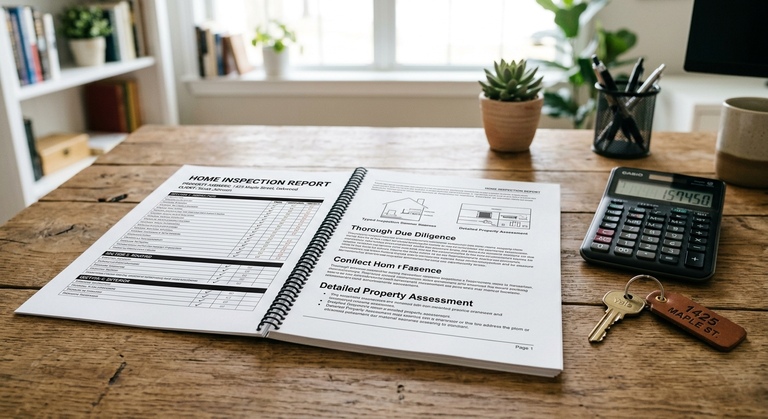
Start with a professional home inspection. This is the most important $500 you will ever spend. The inspector should provide a detailed report with photos of every major system: the foundation, the roof, the plumbing, the electrical, and the HVAC. If the report identifies major issues, use it as a tool to negotiate a lower price or a repair credit. Next, perform a “rent audit.” Check local listings on Zillow, Rentometer, and Facebook Marketplace to see what similar homes are actually renting for. Do not take the “pro forma” rent provided by the seller at face value.
Finally, verify the property taxes and insurance. Call a local insurance agent and get a firm quote based on the property’s specific location and age. Check the county assessor’s website to see the current tax bill and find out if there are any pending tax increases or special assessments. This level of detail might feel tedious; but, it is exactly what separates a professional investor from a gambler. By completing this checklist for every potential deal, you ensure that your out of state real estate investing journey is built on a foundation of facts, not hopes and dreams.
Conclusion: Expanding Your Horizons Safely
Out of state real estate investing is a powerful tool for the “Everyday Millionaire” to build wealth in high-yield markets. By following a systematic analysis process, building a trusted local team, and focusing on conservative math, you can capture the benefits of real estate without being limited by your local geography. Remember that the goal is not just to own property; the goal is to own assets that provide consistent, reliable cash flow.
As you look beyond your backyard, keep the core principles of Invest Often in mind: prioritize cash flow, manage your risks aggressively, and build for the long term. Real estate is a powerful compounding machine, but only if you have the discipline to stay the course and the wisdom to avoid over-leverage. Whether you are buying your first out-of-state rental or your tenth, treat each analysis as a professional business decision. With patience and persistence, you will build a diversified portfolio that supports your life of freedom and financial independence. Invest often, invest wisely, and always keep your eyes on the long-term prize.
Frequently Asked Questions (FAQ)
Is it risky to buy a rental property in another state?
It carries different risks than local investing; however, it is not inherently “riskier” if you have a strong local team and a rigorous due diligence process. The primary risk is the lack of direct oversight, which is mitigated by hiring a high-quality property manager and using professional inspectors. Many investors find that buying in a stable, cash-flowing market out of state is actually safer than buying in an overvalued local market where the math doesn’t work.
How do I find a good property manager for an out-of-state rental?
Start by asking for referrals from local real estate investor groups and checking online reviews. Interview at least three different companies. Ask about their fee structure, their tenant screening process, and how they handle maintenance requests. A good property manager should be proactive, transparent, and have a deep understanding of the local rental laws. You want a partner who treats your investment as if it were their own.
How much cash should I have in reserve for a remote rental?
At Invest Often, we recommend having at least 6 months of operating expenses in reserve for every property. This should cover taxes, insurance, and maintenance. Additionally, you should have a separate CapEx fund for major repairs. When you are investing from a distance, having a robust cash cushion is essential because you cannot personally step in to handle an emergency. A large reserve is the “secret weapon” that allows you to stay in the game during unexpected vacancies or market corrections.
Can I really build a portfolio without using mortgages?
Yes, and for many, it is the superior path. By using the “all-cash” method, you maximize your monthly income and eliminate the risk of foreclosure. You can scale by using the cash flow from your first property to help fund your second. While it may take longer to acquire your first few properties, the resulting portfolio is incredibly resilient and produces a higher level of “sleep-at-night” income than a highly leveraged one. This is the core of the Everyday Millionaire strategy.