
Categories
Investing For Kids

The Match System: Gamifying Allowances for Kids

Why the Traditional Allowance Model Fails: The “Safety Net” Trap

Most parents approach allowances the same way: a flat weekly payout in exchange for a few chores. While this teaches the basic link between work and money, it fails to teach the most critical financial lesson of all: how to make your money work for you. In many ways, the traditional allowance is a “simulation of poverty”—it provides enough to survive (or buy a small toy) but offers no mechanism for growth.

Enter “The Match System.” Instead of just giving your kids money to spend, you become their first “employer” by offering a savings match. This simple shift in psychology transforms them from passive consumers into active producers and savvy savers. It takes the concepts used by Fortune 500 companies to encourage employee retirement and scales them down to the kitchen table.

Why the Traditional Allowance Model Fails: The “Safety Net” Trap

The standard allowance model—giving a child $5 or $10 a week—is essentially a social safety net. It provides “spending money” without any incentive to delay gratification. In fact, the traditional model often encourages immediate consumption. If a child knows another $10 is coming next Friday regardless of what they do with this week’s cash, their logical move is to spend it all today.

Consider the behavior this encourages. When a child spends their entire allowance on a Friday afternoon, they experience the “thrill” of the purchase without any of the “pain” of the loss. Why? Because the supply is perceived as infinite and decoupled from their choices. This mirrors the “lifestyle creep” many adults struggle with. When your income is fixed and your expenses are flexible, the tendency is to expand your lifestyle to meet your income.

By the time most children reach adulthood, they have spent years practicing the art of spending everything they have. They haven’t practiced the art of building capital. They have learned how to be “paid” but they haven’t learned how to “invest.” Furthermore, a flat allowance lacks a “multiplier effect.” In the real world, the most powerful tool for wealth creation is compound interest and employer matching. If you don’t introduce these concepts early, your children will enter the workforce viewing a 401(k) match as a confusing HR benefit rather than the “free money” wealth-building engine it actually is.

The Psychology of Incentive Salience: Moving from Consumption to Production

Human beings are wired to respond to incentives. In behavioral economics, we call this “incentive salience”—the process by which a stimulus (like money) becomes a “wanted” goal. When you offer a match, you are significantly increasing the “cost” of spending.

In a traditional system, a $5 toy costs $5. In a Match System where you match 100% of savings, that $5 toy actually costs $10. It costs the $5 spent plus the $5 of “match money” the child forfeited by not saving it. This creates a powerful psychological friction. Suddenly, the child isn’t just asking, “Do I want this toy?” They are asking, “Is this toy worth losing the double-money I would have received?”

Our proprietary research at Invest Often suggests that the “Producer vs. Consumer” mindset shift takes about 14 months of consistent behavior to become a lifestyle. By starting this process with an allowance match, you are giving your children a decade-long head start on this mental transition. They begin to see money not just as a tool for buying things, but as a seed that can grow into a forest. They start to evaluate every purchase through the lens of “Opportunity Cost.”

Case Study: The “Double Your Money” Effect in Action

Let’s look at a real-world scenario of how the Match System changes behavior. Take “Leo,” an 8-year-old who receives $10 a week.

Under the Traditional Model:
Leo receives $10. He goes to the store and buys a $10 LEGO pack. He has $0 left. Next week, he repeats the process. Over a year, he has “consumed” $520 worth of plastic bricks and has $0 in net worth.

Under the Match System:
Leo receives $10. His parents offer a 100% match on anything he saves for at least three months. Leo decides to save $5 and spend $5.

  • Leo spends $5 on a smaller LEGO pack.
  • Leo puts $5 in his “Match Jar.”
  • His parents “match” that $5, adding another $5 to the jar.
  • Total saved this week: $10.

By the end of the year, Leo has still spent $260 on LEGOs (enjoying his childhood), but he also has $520 in his savings jar. He has effectively doubled his wealth through the power of the match. He sees that while his “work” earned him $10, his “choices” earned him an extra $5. This is the first step toward understanding that capital can be a more efficient worker than labor.

Introducing the Match: A Script for Parents

When you introduce the Match System, don’t use complex financial jargon like “Asset Allocation” or “Employer Contributions.” Instead, use the language of a “Level Up” or a “Power Up.” Here is a simple script you can use:

“Starting this week, we are changing how your allowance works to help you grow your money faster. For every dollar you choose to save in your ‘Wealth Jar’ instead of spending it right away, I will match it with another dollar. That means if you save $1, I’ll give you $1. If you save $5, I’ll give you $5. This is ‘free money’ that only people who save get to have. It’s like a superpower for your piggy bank.”

This immediately changes the conversation from “How much can I buy?” to “How much can I earn?” You are effectively offering them a 100% return on their investment—an ROI that is impossible to find in the traditional markets but perfectly reasonable in the “Parental Bank.” You are normalizing the idea that savers are rewarded and spenders are not.

Implementation Rules: The “Corporate Governance” of the Home

To make the Match System effective, you need clear, non-negotiable rules. Consistency is the key to building the “savings muscle.” If the rules change every week, the child will lose trust in the system and revert to immediate consumption.

  • The 50/50 Split (Optional but Recommended): Consider requiring that at least 50% of their base allowance goes into the “Savings Bucket” to qualify for any match on the remaining 50%. This ensures they are always building a core foundation regardless of their discretionary choices.
  • The “Locked Door” Policy: Match money is for long-term growth, not for next week’s video game. Establish that matched funds are “locked” until a specific milestone, such as their 13th birthday, their first car, or opening a formal investment account. If they withdraw the money early, they “forfeit” the match. This mirrors the early withdrawal penalties in a 401(k) or IRA.
  • The “Match Cap”: Just like a real 401(k), you should cap the match at a certain dollar amount per month. This keeps your “parental payroll” within budget and teaches the child that there is a limit to how much “free money” is available, encouraging them to maximize it every single period.
  • Visibility is Key: Use a clear jar for younger kids. Seeing the “parent money” sitting next to their “earned money” provides a visual feedback loop. For older kids, a shared Google Sheet or an app can track the “Parental Match Balance.”

The Match System: Gamifying Allowances for Kids

Milestone Rewards: Beyond the Match

While the match is the primary incentive, “Milestone Rewards” can help maintain momentum over the long years of childhood.

  • The “Double Digit” Bonus: When the child reaches $100 in total savings, provide a one-time “bonus” (e.g., $20) to celebrate the milestone.
  • The Interest Payment: Once a month, “pay” interest on the total balance in the jar (e.g., 1% of the balance). This introduces the concept of compound interest—money making money on top of more money.
  • The Investment Pivot: When the jar reaches a certain amount (e.g., $500), go together to open a formal brokerage account. This makes the transition from “saving” to “investing” a tangible rite of passage.

Choosing the Vehicle: From Jars to Roth IRAs

The vehicle you use for the Match System should evolve as your child grows.

The Toddler/Elementary Phase: Physicality matters. A clear jar allows them to see the volume of coins and bills increasing. The “clink” of a coin being dropped in is a dopamine hit that reinforces the saving habit. Use two jars: one labeled “Spend” and one labeled “Grow.”

The Middle School Phase: It’s time to move toward “Digital Literacy.” This is where you can introduce the concept of a Custodial Account (UTMA/UGMA). These accounts allow you to hold assets on behalf of the minor. However, be aware of the “Kiddie Tax” implications. For 2024, the first $1,300 of unearned income (dividends/gains) is tax-free, but amounts over $2,600 are taxed at your marginal rate. This is a great time to teach them about taxes—another “grown-up” reality.

The High School Phase: If your child has any “earned income” from a paper route, lawn mowing, or a part-time job, the Custodial Roth IRA is the gold standard. You can match their earnings dollar-for-dollar into the Roth (up to the annual IRS limit). This allows the money to grow tax-free for decades. Imagine the power of a 16-year-old having a Roth IRA; they are literally setting themselves up to be “Everyday Millionaires” before they even graduate high school.

The Math of Early Compounding: A $1.00 Match Today is $100 Tomorrow

To truly sell your kids (and yourself) on the Match System, you have to look at the long-term math. Let’s assume you match $25 a month starting when your child is 6 years old. By the time they are 18, you have contributed $3,600 in matches.

If that money is invested in a low-cost index fund (like VTSAX) returning an average of 8% annually, that $25/month (plus your $25 match) grows to over $13,000 by their 18th birthday. If they leave that $13,000 alone in a Roth IRA and never add another cent, at an 8% return, it could grow to:

  • $28,000 by age 28
  • $60,000 by age 38
  • $130,000 by age 48
  • $280,000 by age 58
  • $500,000+ by age 65

A single $1.00 match provided when they are 6 years old has nearly 60 years to compound. You aren’t just giving them a dollar; you are giving them the foundation of a multi-million dollar retirement.

The “Producer” Mindset: Longitudinal Benefits

The ultimate goal of the Match System isn’t just to save money; it’s to change the child’s identity. Most people view themselves as “consumers.” They work to get money to buy things. They are on a hedonic treadmill, always one paycheck away from disaster.

A “producer” views themselves differently. They work to acquire capital, which they then deploy to create more value. When a child sees their “Savings Bucket” growing because of their own choices and your match, they begin to see themselves as someone who builds wealth rather than someone who spends income.

In our interviews with debt-free individuals at Invest Often, we found that those who were taught “producer” habits early in life were 70% less likely to carry high-interest credit card debt in their 20s. They understood that a dollar spent on a depreciating asset (like a new car or trendy clothes) is a dollar that can no longer work for them. They learned to value the growth of the dollar more than the utility of the item.

Troubleshooting: What if they don’t want to save?

Not every child will be a natural saver. Some are “natural spenders” who value immediate experiences over future security. If your child refuses to save even with a 100% match, do not force them. Instead, let them experience the “natural consequence” of their choice.

When they want a big-ticket item (like a new video game console) and don’t have enough money, resist the urge to “loan” them the difference. Instead, show them the “Match Jar.” Say: “If you had saved half your allowance for the last six months, I would have matched it, and you would have enough for the console today. Because you chose to spend it all on small toys, you don’t have enough for the big one.”

This is a painful lesson, but it is better learned with a $300 console at age 10 than with a $30,000 car at age 25. The Match System provides the “carrot,” but life provides the “stick.” Your job is to facilitate both.

From Parental Match to Corporate Match: The Final Hand-off

As your child enters the workforce, the Match System reaches its final stage: the hand-off. When they get their first “real” job, sit down with them and look at their benefits package.

“Remember the Match System we did when you were 10? Your company is doing the exact same thing with their 401(k). They will match your savings dollar-for-dollar up to a certain point. If you don’t save, you are literally giving up part of your salary.”

Because they have been practicing this for a decade, the 401(k) match won’t feel like a complex financial decision. it will feel like second nature. They have already built the “savings muscle” and the “match habit.” They are prepared to dominate their financial life from day one.

Frequently Asked Questions (FAQ)

At what age should I start the Match System?
You can start as soon as a child understands the concept of “more.” Usually, age 5 or 6 is a perfect time to transition from a simple piggy bank to a Match System. By age 7, most children can understand the “Double Your Money” concept clearly.

What if I can’t afford a 100% match?
The percentage doesn’t matter as much as the principle. A 25% match (25 cents for every dollar) still provides a significant incentive. The goal is to create the “match habit,” not to hit a specific dollar amount. If you have multiple children, a lower match percentage might be necessary to keep your budget balanced.

Should I match money they receive as gifts (like from Grandma)?
That depends on your goals. Some parents only match “earned” money (allowance for chores) to emphasize the link between work and savings. Others match everything to maximize the compounding effect. If you want to encourage them to save their “windfalls” (like birthday money), offering a match is a great way to do it.

What happens if they want to withdraw the money for a big purchase?
This is a great teaching moment. Allow them to withdraw their “earned” portion, but consider “vesting” rules for your match. For example, they can only access the match money for “productive” purchases like a first car, college tuition, or an investment account. If they buy a toy with it, they lose the match.

Is this “bribing” my kids to save?
Incentivizing isn’t bribing. In the real world, we are all incentivized by salaries, bonuses, and tax advantages. Teaching your child how to navigate an incentive-based world is one of the most practical skills you can provide. Bribing is paying someone to do something they should do; matching is partnering with someone on something they want to do for their future.

Final Thoughts: The Legacy of the Match

The Match System is more than a financial hack; it’s a legacy builder. You are teaching your children that their choices have consequences—and that the right choices lead to exponential rewards. You are moving them from a world of “scarcity and spending” to a world of “abundance and investing.”

By the time they enter the “real world,” they won’t be looking for ways to spend their first paycheck. They’ll be looking for the “match” in their company’s benefits package, the “match” in their tax-advantaged accounts, and the “match” that comes from disciplined, long-term investing. You are giving them the greatest gift of all: the freedom that comes from financial literacy and the confidence of a “Producer” mindset.


Categories
Investing For Kids

Trusted Financial Education Resources for 3-year-olds

In today’s fast-paced world, the importance of financial literacy cannot be overstated. It’s never too early to start educating children about money, and even 3-year-olds can begin to grasp some fundamental concepts. This article will explore trusted financial education resources designed specifically for preschoolers, helping them build a solid foundation for a financially savvy future.

Money and toys

Trusted Financial Education Resources for 3-year-olds

Why Start Early?

Before we dive into the resources, let’s understand why it’s crucial to initiate financial education at such a young age.

1. Setting a Strong Foundation

Teaching financial literacy to 3-year-olds lays the groundwork for responsible money management in the future. Early exposure to these concepts can shape their financial behaviors as they grow.

2. Encouraging Healthy Habits

Starting young helps instill healthy financial habits, such as saving, budgeting, and distinguishing between wants and needs. These habits can serve children throughout their lives.

Exploring Trusted Financial Education Resources

There are a number of trusted financial education resources available for 3-year-olds. Here are a few examples:

Books

Popular books about money and investing for 3 years old include:

  • The Everything Kids’ Money Book: Earn it, Save it, and Watch it Grow! by Greg Farrell
  • Moneybunny by Munro Leaf
  • The Berenstain Bears’ Money Trouble by Stan and Jan Berenstain

Websites

MoneyAsYouGrow

MoneyAsYouGrow is a set of free financial resources provided by the Consumer Financial Protection Bureau (CFPB), a U.S. government agency that makes sure banks, lenders, and other financial companies treat you fairly.

Money as You Grow’s goal is to help parents and caregivers
No need to be a money expert—the tips and activities here can help your children’s money skills, habits, and attitudes grow.

Money as You Grow was recommended as an initiative by the President’s Advisory Council on Financial Capability, chaired by John W. Rogers and vice-chaired by Amy Rosen. The initiative, developed by Beth Kobliner, chair of the Council’s Money as You Grow working group, offered essential, age-appropriate financial lessons—with corresponding activities—that kids need to know as they grow. Written in down-to-earth language for children and their families, Money as You Grow helped equip kids with the knowledge they need to live fiscally fit lives. The lessons in Money as You Grow were based on more than a year of research, and drawn from dozens of standards, curricula, and academic studies.

The CFPB researched the way children develop the abilities and attributes that contribute to their financial well-being in adulthood. Additional research identified milestones for developing financial capability, and ways to measure it. With support from the Corporation for Enterprise Development and researchers from University of Wisconsin–Madison and University of Maryland, Baltimore County, we developed a framework that connects Money as You Grow activities to children’s financial developmental stages. With that framework in mind, we have updated and adapted the Money as You Grow activities and content.

Kids Financial Education – SageVest Kids

kidsfinancialeducation – SageVest Kids was created by Jennifer Myers, CFP, President of SageVest Wealth Management.

Jennifer is an award-winning financial advisor, dedicated to helping clients achieve financial success and fulfillment. Her decades of experience encountering varying financial circumstances made her acutely aware of the need for stronger financial literacy for our next generation.

Furthermore, as a hard-working single mother of two kids, she understands the time challenges that parents face.

The combination of Jennifer’s professional and personal outlooks led to the creation of SageVest Kids, which is designed to offer easy step-by-step instructions on how to prepare your kids for financial success.

SageVest states: “We’re honored to offer SageVest Kids as a resource for high-quality financial literacy guidance to all families, regardless of economic advantage. Every child deserves a strong financial education, regardless of their zip code or their family’s financial means. We offer SageVest Kids in hopes of promoting a brighter financial future for everyone.”

JumpStart

JumpStart is a national nonprofit coalition of more than 100 organizations from business, finance, academia, education, government and other sectors, as well as a network of 51 state affiliates, which share a commitment to “financial smarts for students.”

The Jump$tart Coalition works to raise awareness about the importance of financial literacy and the need for financial education, especially among youth; fosters collaboration among financial literacy stakeholders; and promotes and supports effectiveness in financial education endeavors.

Apps

  • Allowance Tracker Kids
  • Piggybot
  • Savings Spree

Games and activities

  • Money Match
  • Piggy Bank Toss
  • Lemonade Stand

Financial education programs

  • Junior Achievement
  • Money Smart Kids
  • Operation HOPE

Tips for parents

Here are a few additional tips for parents who are teaching their 3-year-olds about money:

  • Start with the basics. Teach your child about different types of money, how to count money, and how to make change.
  • Use real-world examples. When you’re at the store, talk to your child about how much things cost and how you decide what to buy.
  • Make it a family affair. Get everyone in the family involved in learning about money. You can play money games together, set financial goals together, and celebrate each other’s successes.

Implementing Financial Education at Home

To effectively teach financial education to 3-year-olds, consider the following tips:

1. Use Real Money

When using piggy banks and savings jars, use real money to create a tangible connection between children and currency.

2. Repetition is Key

Repeat lessons regularly to reinforce understanding. Children often need multiple exposures to a concept before it fully sinks in.

3. Set a Good Example

Children learn by observing. So, model healthy financial behaviors yourself. Discuss your own saving and spending decisions with your kids.

4. Make it Fun

Engage children in playful financial activities, such as setting up a pretend store, using play money, and having them “buy” items.

Conclusion

Teaching financial education to 3-year-olds may seem unconventional, but it’s a proactive step toward building a financially responsible future. Trusted resources like piggy banks, books, apps, games, videos, and workshops can make this process engaging and enjoyable.

Incorporating financial education into a child’s early years is an investment in their financial well-being, helping them navigate the complex world of money with confidence.

Frequently Asked Questions (FAQs)

1. Is it too early to teach financial education to 3-year-olds?

  • Not at all! Early exposure to financial concepts can help children develop a strong foundation for responsible money management.

2. Are there any financial education apps suitable for preschoolers?

  • Yes, several apps, like “PiggyBot” and “iAllowance,” are designed to teach kids about budgeting and saving in a fun and interactive way.

3. How can I make financial education engaging for my child?

  • Incorporate play, use real money, and repeat lessons to make financial education enjoyable and memorable for your child.

4. Are there any financial education workshops for young children?

  • Some organizations offer workshops specifically designed to teach financial literacy to young children, providing hands-on experiences and learning opportunities.

5. What is the importance of teaching children about money from a young age?

  • Teaching children about money from a young age helps them develop responsible financial habits, make informed decisions, and become financially literate individuals as they grow.
Categories
Investing For Kids

Equip Your 3-Year-Olds With Essential Investment Tools

In today’s rapidly evolving financial landscape, the importance of teaching financial literacy from a young age cannot be overstated. The earlier children start learning about money and investing, the better equipped they are for future financial success. This article explores the essential investment tools for 3-year-olds, focusing on how to set a strong financial foundation for their future.

Essential Investment Tools for 3-Year-Olds: Equipping Them for Financial Success

Why Start Investing Early?

Starting to invest at a young age offers numerous advantages. Children who grasp the basics of saving and investing early are more likely to develop sound financial habits, make informed decisions, and secure their financial future.

Here are some of the benefits of teaching kids about investing early:

  • It helps them develop healthy financial habits. Learning about investing can help kids understand the importance of saving money, budgeting, and investing for the future. These are all important financial habits that can help them avoid debt and build wealth over time.
  • It gives them a head start on their financial goals. Whether your child wants to buy a house, start a business, or retire early, investing early can help them achieve their goals faster.
  • It teaches them about the power of compound interest. Compound interest is when your earnings start earning their own earnings. Over time, compound interest can have a significant impact on your investment returns.

By teaching children the value of money and the benefits of investing, parents can instill a lifelong financial understanding.

Setting the Foundation: Financial Literacy

Before diving into investment tools, it’s crucial to establish a solid foundation of financial literacy. This includes teaching kids about the concepts of earning, saving, spending, and investing. Use simple, relatable examples to explain these ideas, ensuring that children understand the basics.

The Importance of Saving

Child saving jar

Savings is often the first step in a child’s financial journey. Introducing your child to the concept of saving money through a piggy bank or a savings account can be a fun and educational experience. It teaches them the importance of setting money aside for future needs and goals.

Investment Tools for Young Children

Savings Accounts

Savings accounts specially designed for children are an excellent way to introduce them to the world of finance. These accounts typically offer low minimum balances and educational incentives, making saving money enjoyable and educational.

UTMA/UGMA accounts

UTMA/UGMA accounts are custodial accounts that allow adults to give money or property to minors. UTMA/UGMA accounts can be used to invest in a variety of different assets, including stocks, bonds, and mutual funds.

Piggy Banks

Piggy banks are a classic way for young children to save. They allow kids to physically see their savings grow as they deposit coins and small bills. Encourage your child to save a portion of any money they receive, like allowances or gifts, in their piggy bank.

Investment Bonds

Investment bonds are a low-risk option for children’s investments. These bonds typically have a fixed interest rate, providing a secure way to save and grow your child’s money over time.

Stock Investments

While not typically recommended for very young children, introducing the concept of stocks can be done in a simplified way. You can discuss how companies work, and how owning a share means owning a piece of a company.

Choosing the Right Tools

Selecting the right investment tools depends on your child’s age, financial goals, and risk tolerance. Consider discussing options with a financial advisor who specializes in child investments to ensure you make informed decisions.

Teaching Financial Responsibility

Incorporate lessons about money management and budgeting as part of your child’s financial education. Teach them the value of making informed spending choices, differentiating between wants and needs.

Talking to your kids about money and investing can be a bit daunting, but it’s important to start early. Here are a few tips:

  • Make it simple. Start by teaching your child basic financial concepts like saving, spending, and sharing. Once they have a good understanding of these concepts, you can start talking about investing.
  • Use real-world examples. When you’re talking to your child about investing, try to use real-world examples that they can understand. For example, you could talk about how investing in a company that makes your favorite cereal could help you buy more cereal in the future.
  • Make it fun. There are a number of books and games available that can help you teach your child about investing in a fun and engaging way.

Instilling Patience and Persistence

Teaching children that investments take time to grow and require patience is essential. Encourage them to set long-term goals and show them how consistent savings and investment can help achieve those goals.

When you’re investing for your child, you should choose investments with a long-term horizon. This means choosing investments that you’re willing to hold for at least five years, or even longer. This is because the stock market can be volatile in the short term, but it has historically trended upwards over the long term.

How Parents Can Get Involved

Parents play a crucial role in their child’s financial education. By demonstrating responsible financial behavior and discussing money matters openly, you set a positive example for your child to follow.

Encouraging Goal Setting

Help your child set financial goals, whether it’s saving for a special toy or a college fund. Goal setting instills the importance of working toward something and the satisfaction of achieving it.

Balancing Risk and Reward

As children get older, you can introduce them to the concept of risk and reward. Explain how different investments carry different levels of risk and potential returns.

Teach your child about the importance of diversification. Diversification is the process of spreading your money across different asset classes and investment sectors. This helps to reduce your risk if one asset class or sector underperforms.

Tracking Progress

Regularly review your child’s investments and savings together. Show them how their money has grown and discuss any changes or adjustments to their financial strategy.

Preparing for the Future

By starting early and investing wisely, children can set themselves up for a financially secure future. The skills and knowledge they gain will benefit them throughout their lives.

Conclusion

Teaching your 3-year-old about essential investment tools is an investment in their future. By starting early and focusing on financial literacy, saving, and age-appropriate investment tools, you give your child the tools they need for financial success.

FAQs

1. When is the best time to start teaching my child about investments?

The sooner, the better. It’s never too early to introduce basic financial concepts to your child. Even at a young age, you can start with simple ideas about saving and spending.

2. Are there special investment options for children?

Yes, there are savings accounts and investment bonds specifically designed for children. These are often a great starting point.

3. How can I make learning about money fun for my child?

Use games, visual aids like piggy banks, and age-appropriate stories to make financial learning engaging and enjoyable.

4. What’s the most important lesson to teach a young child about money?

The value of saving. Teach your child that saving a portion of their money is a responsible and rewarding practice.

5. How can I continue my child’s financial education as they get older?

As your child grows, you can gradually introduce more complex financial concepts, such as investing in stocks and setting financial goals. Adapt their financial education to their age and understanding.

Categories
Investing For Kids

Top Investment Books for 3-Year-Olds: Sparking Financial Curiosity

In this digital age, teaching children about money from an early age is essential. One way to instill financial literacy in your child is through the power of books. We’ve curated a list of top investment books designed specifically for 3-year-olds. These books aim to spark financial curiosity in young minds, laying the foundation for a lifetime of smart financial decision-making.

Top Investment Books for 3-Year-Olds: Sparking Financial Curiosity

Why Start Early?

The Importance of Early Financial Education

Starting financial education at an early age has long-lasting benefits. Children are like sponges, absorbing information and habits quickly. By introducing financial concepts in the form of captivating stories, you can prepare your child for a prosperous financial future.

Building Strong Financial Foundations

A solid understanding of money and investments can empower your child to make informed decisions as they grow older. It’s akin to teaching them a lifelong skill that can help secure their financial well-being.

The Top Investment Books

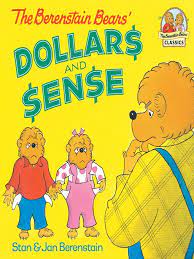
The Berenstain Bears’ Dollars and Sense by Stan and Jan Berenstain

The Berenstain Bears’ Dollars and Sense by Stan and Jan Berenstain

“The Berenstain Bears’ Dollars and Sense” by Stan and Jan Berenstain is a delightful addition to the beloved Berenstain Bears series, known for its ability to impart valuable life lessons in an engaging and accessible way. This book is a fantastic resource for parents looking to introduce their young children to the basics of money, saving, and spending.

In this engaging story, Brother and Sister Bear embark on a financial adventure, learning valuable lessons about the world of money and personal finance. As with many Berenstain Bears books, the characters and their experiences are relatable to kids, making it easier for them to understand and connect with the material.

The narrative is centered around a school project, where the cubs are tasked with managing a small amount of money. The book takes young readers through the ups and downs of spending, saving, and budgeting as Brother and Sister Bear make choices and face the consequences. Through these relatable scenarios, children are introduced to important financial concepts, including the value of saving for future goals.

“The Berenstain Bears’ Dollars and Sense” beautifully weaves financial education into a heartwarming story that emphasizes the importance of wise money management. It encourages kids to think about their spending choices and the impact of those decisions on their savings.

One of the book’s notable features is its charming illustrations, which bring the story to life and engage young readers. The Berenstain Bears series is known for its vivid, colorful artwork, and this book is no exception. The illustrations complement the story, making it even more appealing to children.

Parents can use “The Berenstain Bears’ Dollars and Sense” as a starting point for discussions about money and financial responsibility. It opens the door to essential conversations about saving for goals, making thoughtful spending choices, and understanding the value of money.

In summary, “The Berenstain Bears’ Dollars and Sense” is a fantastic resource for teaching kids about money in a fun and engaging way. It imparts valuable financial wisdom in a manner that is accessible to young children, making it an excellent tool for parents who want to instill early lessons in financial literacy. This book is sure to become a cherished addition to any child’s library, providing not only a good read but also a valuable life lesson.

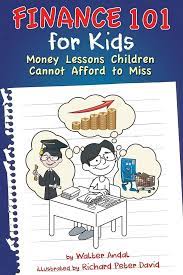
Finance 101 for Kids: Money Lessons Children Cannot Afford to Miss by Walter Andal

Finance 101 for Kids: Money Lessons Children Cannot Afford to Miss by Walter Andal

Financial literacy is a critical life skill, and it’s never too early to start teaching children about money and personal finance. “Finance 101 for Kids: Money Lessons Children Cannot Afford to Miss” by Walter Andal is a remarkable resource that equips parents and educators with an accessible and engaging way to introduce kids to the world of finance.

This book is not just another addition to the children’s literature on money; it’s a comprehensive guide that takes kids on a journey through fundamental financial concepts. Walter Andal, a seasoned financial expert, skillfully breaks down complex financial ideas into age-appropriate language and relatable scenarios.

One of the book’s strengths lies in its ability to gradually introduce children to money-related concepts, starting with the basics and gradually building up to more complex ideas. From understanding what money is and how it works to explaining the concepts of saving, spending, budgeting, and investing, “Finance 101 for Kids” covers a wide range of financial topics.

The narrative is interactive and engaging, making use of relatable stories and examples that kids can connect with. Andal uses a combination of storytelling and colorful illustrations to bring financial lessons to life, capturing the attention of young readers and making the concepts easy to comprehend.

What truly sets this book apart is its practical approach to financial education. It doesn’t just tell children about money; it encourages them to apply what they’ve learned through fun exercises and activities. This hands-on aspect of the book empowers kids to put their newfound knowledge into practice, reinforcing the lessons in a meaningful way.

“Finance 101 for Kids” serves as a valuable resource for both parents and teachers who aim to instill important money lessons in children. It offers a comprehensive and engaging foundation in financial literacy, ensuring that children are well-prepared to navigate their financial journey as they grow.

In a world where financial decisions play a significant role in our lives, teaching kids about money is an investment in their future. Walter Andal’s book is a beacon in this quest, offering money lessons that children cannot afford to miss. It’s a must-have for any child’s library, equipping them with the knowledge and skills to make sound financial choices throughout their lives.

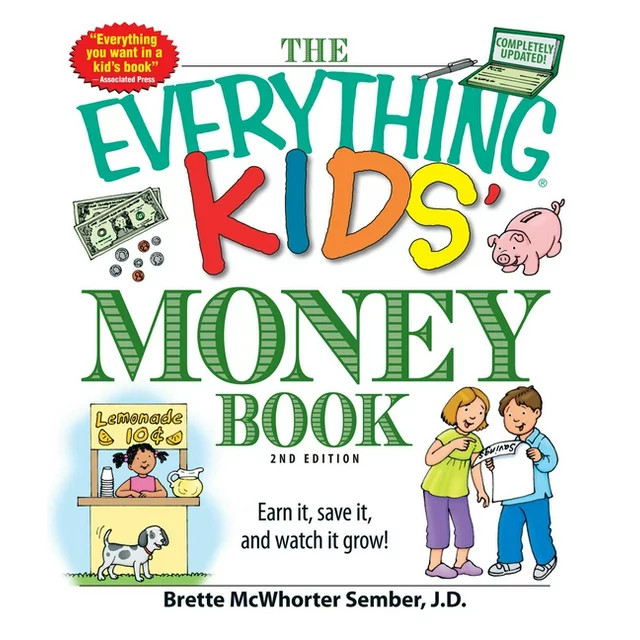
The Everything Kids’ Money Book: Earn it, save it, and watch it grow! by Brette Sember

The Everything Kids’ Money Book: Earn it, save it, and watch it grow! by Brette Sember

. “The Everything Kids’ Money Book: Earn it, save it, and watch it grow!” by Brette Sember is a remarkable resource that empowers young minds with practical and engaging financial knowledge.

This book is not just another children’s book about money; it’s a comprehensive guide that demystifies financial concepts for kids in a way that is easy to understand and relatable. Brette Sember, an experienced writer and expert in family and finance matters, has crafted a resource that takes kids on a journey from the basics of money to more complex financial ideas.

The strength of “The Everything Kids’ Money Book” lies in its ability to break down seemingly complex concepts into digestible pieces. It starts with the fundamental principles of what money is, how it is earned, and why it is important. As the book progresses, it delves into topics like budgeting, saving, investing, and even understanding financial institutions, making it a comprehensive guide to financial literacy for children.

One of the book’s notable features is its interactive approach to teaching finance. It encourages kids to apply what they’ve learned through hands-on activities, quizzes, and exercises. This not only reinforces the lessons but also makes learning about money enjoyable.

The language used in the book is child-friendly and engaging, making it accessible to young readers. It avoids jargon and complicated terminology, ensuring that kids can easily grasp the concepts being presented. The book is further enhanced by colorful illustrations and a vibrant layout, making it visually appealing to children.

“The Everything Kids’ Money Book” is a fantastic resource for parents, teachers, and caregivers who want to equip children with essential financial knowledge. It goes beyond just explaining the principles of money; it encourages practical application, empowering kids to take control of their financial future.

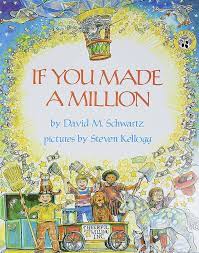
If you Made a Million by David M. Schwartz

If you Made a Million by David M. Schwartz

“If You Made a Million” by David M. Schwartz is a delightful and educational book that takes young readers on a financial adventure, making complex money-related concepts accessible and engaging.

The book is essentially a journey of discovery, narrated by two young siblings, Marcy and Jake, who embark on a quest to learn about the world of finance. Through colorful and imaginative illustrations, readers are introduced to various financial concepts, such as earning, saving, spending, and investing, in a way that is both fun and relatable.

David M. Schwartz uses clever scenarios and comparisons to explain complex ideas. For instance, he likens the concept of a million dollars to stacks of $1,000 bills, helping children visualize the sheer magnitude of such a sum. This approach is not only informative but also captivating for young minds.

One of the book’s key strengths is its interactivity. Throughout the story, readers are encouraged to actively participate by solving financial puzzles, calculating interest, and understanding the difference between income and expenses. This hands-on approach makes the learning experience dynamic and engaging.

The language used in “If You Made a Million” is accessible to children, avoiding overly technical terms and explanations. The narrative is supplemented by vivid and whimsical illustrations by Steven Kellogg, which add a layer of charm to the book and help bring the financial concepts to life.

The book’s emphasis on the practical application of financial knowledge is another notable feature. It inspires children to consider the financial choices they make and encourages them to think about how they can use their money wisely. Through this journey of discovery, kids not only learn about money but also gain a sense of financial responsibility.

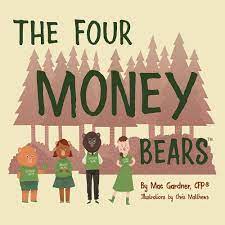
The Four Money Bears by Mac Gardner

The Four Money Bears by Mac Gardner

The Four Money Bears is a financial literacy book for kids written by Mac Gardner. It tells the story of four bears, each of whom represents a different way to manage money:

  • Spender Bear: Spender Bear loves to spend money. He buys everything he sees, even if he doesn’t need it.
  • Saver Bear: Saver Bear loves to save money. He puts away money every month and invests it so that it can grow over time.
  • Investor Bear: Investor Bear loves to invest money. He buys stocks, bonds, and other investments in the hope of making money in the future.
  • Giver Bear: Giver Bear loves to give money to charity. He believes in helping others and making the world a better place.

The Four Money Bears learn that there is no one right way to manage money. The best way to manage money is to find a balance between spending, saving, investing, and giving.

The Four Money Bears is a great book to teach kids about the basics of financial literacy. It is written in a simple and engaging way, and the illustrations are colorful and fun. The book also includes a few activities at the end to help kids practice what they have learned.

Here are a few key takeaways from the book:

  • It is important to have a plan for your money.
  • It is important to save money for the future.
  • It is important to invest money so that it can grow over time.
  • It is important to give back to the community.

The Four Money Bears is a great book for parents and teachers to read to their children. It is a fun and educational way to teach kids about financial literacy.

How to Make Reading Fun

Engaging Activities

Make the learning experience more enjoyable by engaging your child in activities related to the stories. Create a “savings jar” where they can keep their coins or play a game where they make financial decisions.

Reading Together

Reading these books together not only strengthens the parent-child bond but also allows you to explain financial concepts as you go along, ensuring that they understand the material.

Conclusion

Teaching financial literacy to 3-year-olds might sound challenging, but with the right books, it can be a delightful experience. The top investment books mentioned above are powerful tools to spark your child’s financial curiosity. By instilling these concepts early on, you are setting the stage for a financially savvy future.

FAQs

FAQ 1: When is the right time to start teaching kids about money?

The earlier, the better! 3-year-olds are curious and eager learners, making it an ideal age to introduce basic financial concepts.

FAQ 2: How can I make financial education fun for my child?

Use interactive activities, games, and engaging books to make the learning process enjoyable and relatable.

FAQ 3: Are these books suitable for older kids too?

While these books are designed for 3-year-olds, they can be a great introduction for older children as well. For older kids, you can explore more advanced financial books.

FAQ 4: Can these books really make a difference in my child’s financial future?

Yes, they can! By introducing financial concepts at an early age, you’re giving your child a head start in understanding money, investments, and making wise financial choices.

FAQ 5: Where can I find these books?

You can find these books in local bookstores, libraries, or online retailers. Additionally, some are available as e-books for convenient access on digital devices.

Categories
Investing For Kids

Educational Money Toys for Toddlers

As parents, we all want the best for our children. One essential life skill that is often overlooked in early childhood education is financial literacy. Teaching your toddler about money and financial concepts can set the stage for a secure and responsible financial future. In this article, we will explore the world of educational money toys for toddlers and how they can play a significant role in shaping your child’s financial knowledge.

Educational Money Toys for Toddlers

The Importance of Early Financial Literacy

Financial literacy is a crucial skill that everyone should possess, and it’s never too early to start teaching it. By introducing financial concepts to your toddler through play, you can build a strong foundation for their future understanding of money, budgeting, and saving.

Benefits of Educational Money Toys

Educational money toys offer numerous advantages in your child’s development. These toys are designed to be engaging, fun, and educational, making learning about money an enjoyable experience. They help kids grasp essential concepts while improving their fine motor skills, mathematical abilities, and even social skills.

What are the benefits of educational money toys?

Educational money toys offer a number of benefits for toddlers, including:

Teaches basic math skills: Money toys can help toddlers learn basic math skills, such as counting, sorting, and adding. For example, toddlers can use play money to count how many coins they have or to sort coins by denomination.

Promotes financial literacy: Money toys can help toddlers develop financial literacy by teaching them about different types of money and how to use it responsibly. For example, toddlers can learn about the difference between coins and bills, and they can learn how to make purchases with play money.

Encourages independent play: Money toys can encourage independent play by giving toddlers something to do on their own. For example, toddlers can use play money to set up their own store or to play with their friends.

Develops fine motor skills: Money toys can help toddlers develop their fine motor skills by picking up and manipulating small objects. For example, toddlers can use play money to operate a toy cash register or to sort coins by denomination.

Boosts creativity and imagination: Money toys can boost creativity and imagination by allowing toddlers to create their own games and scenarios. For example, toddlers can use play money to set up a lemonade stand or to play restaurant.

Money toy for kids

Top Educational Money Toys for Toddlers

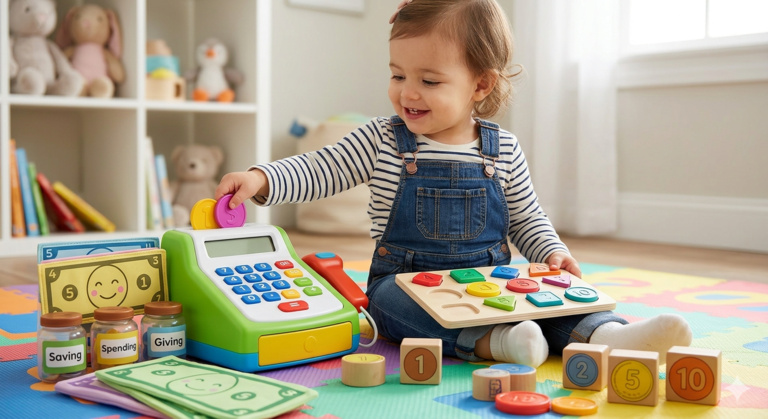
Coin Sorting Piggy Banks

Coin sorting piggy banks are a fantastic way to teach your toddler about different coin values and the concept of saving. They can have fun sorting and dropping coins into the slots while learning to differentiate between various coins.

Play Cash Register

A play cash register is an interactive toy that introduces your child to the world of transactions and basic arithmetic. It encourages role-play and helps kids understand the exchange of money for goods.

Money Puzzles

Money puzzles make learning fun by combining play with problem-solving. These puzzles typically involve matching coin illustrations with their respective values, enhancing your child’s recognition skills.

Educational Money Books

Educational money books are an excellent resource for introducing financial concepts to your toddler through storytelling and colorful illustrations. These books often cover basic money-related topics in an engaging way.

Money Games

Money games are a playful way to learn about spending, saving, and budgeting. These games can be both entertaining and educational, teaching kids about making choices with their money.

How to Choose the Right Educational Money Toys

When selecting educational money toys for your toddler, consider their age, interests, and learning style. It’s essential to choose toys that align with your child’s developmental stage to maximize the educational benefits.

Incorporating Money Toys into Learning

To make the most of educational money toys, integrate them into your child’s daily routine and playtime. Discuss financial concepts in simple terms and encourage questions to foster curiosity and understanding.

Teaching Financial Concepts

Start with basic concepts like identifying coins and their values. As your child grows, you can introduce more complex ideas like saving, spending, and budgeting.

Developing Fine Motor Skills

Educational money toys often involve manipulating small objects, which can improve fine motor skills and hand-eye coordination. These skills are essential for everyday tasks and school readiness.

Promoting Counting and Basic Math Skills

Money toys provide an excellent opportunity to teach counting and basic math. Through play, kids can become comfortable with numbers and arithmetic concepts.

Encouraging Saving Habits

Introduce the concept of saving by using a piggy bank or a savings jar. Encourage your child to set aside a portion of their allowance or money gifts for future goals.

Budgeting and Planning

As your child grows, teach them about budgeting by setting a “spending plan.” Show them how to allocate their money for various purposes, such as toys, treats, and savings.

Fun and Interactive Learning

Make learning about money enjoyable by turning it into a game. Create scenarios where your child can use play money to “buy” toys or treats, teaching them about the value of money.

Money Toys Beyond Childhood

The knowledge gained through educational money toys isn’t just for childhood. It provides a solid foundation for financial decision-making in adulthood.

Parental Guidance and Involvement

As a parent, your involvement is key to your child’s financial education. Engage in discussions about money, answer their questions, and be a positive financial role model.

Conclusion

Educational money toys for toddlers are an excellent way to introduce financial concepts in a fun and engaging manner. They help children develop important life skills while having a great time. By incorporating these toys into your child’s playtime and daily routines, you can lay the groundwork for a financially responsible future.

FAQs

  1. Are educational money toys suitable for all age groups of toddlers? Educational money toys are designed with varying levels of complexity to suit different age groups, so there are options for toddlers of all ages.
  2. How can I teach my child about saving with money toys? You can encourage saving habits by providing a piggy bank or a dedicated savings jar and explaining the concept of setting money aside for future needs or goals.
  3. What are some interactive money games for toddlers? Interactive money games like “grocery store” or “shopping” can be great fun and educational tools for teaching money concepts to toddlers.
  4. Can educational money toys replace traditional financial education in schools? Educational money toys are a helpful supplement to formal education, but they should not replace comprehensive financial education in schools.
  5. At what age should I start introducing my child to educational money toys? You can start as early as two or three years old, adjusting the complexity of the toys as your child’s understanding of money concepts grows.