Categories
Stock Market Investing

Explore the Best Dividend Stocks for Passive Income

In today’s volatile financial landscape, finding stable and lucrative investment options is a top priority for many investors. One such avenue that has stood the test of time is investing in dividend stocks. These stocks offer a unique blend of growth potential and regular income, making them a popular choice for those seeking to generate passive income. In this comprehensive guide, we will explore the world of dividend stocks, uncovering the strategies, benefits, and some top picks for investors looking to build wealth over the long term.

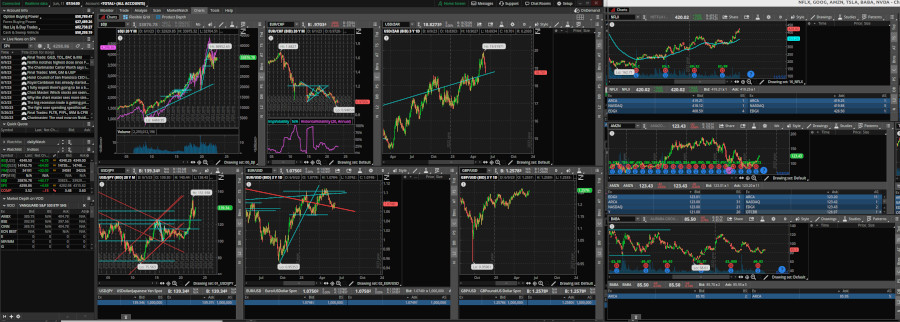
Dividend stock on a computer

Explore the Best Dividend Stocks for Passive Income

Introduction to Dividend Stocks

Dividend stocks represent shares in companies that distribute a portion of their profits to shareholders on a regular basis, usually quarterly. This distribution, known as dividends, can provide investors with a steady stream of income, making them an attractive choice for those looking to supplement their earnings or build wealth over time.

Why Invest in Dividend Stocks

Investing in dividend stocks offers several advantages. First and foremost, they provide a consistent source of income, which can be especially beneficial for retirees or those planning for retirement. Additionally, dividend stocks tend to be less volatile than growth stocks, making them a safer investment option during economic downturns.

How Dividend Stocks Work

Dividend stocks work by companies allocating a portion of their earnings to pay dividends to shareholders. These payments are typically made in cash, although some companies offer stock dividends, where shareholders receive additional shares instead of cash.

Different Types of Dividend Stocks

There are various types of dividend stocks, including common stocks, preferred stocks, and real estate investment trusts (REITs). Each type has its unique characteristics and benefits, catering to different investor preferences and goals.

Selecting the Best Dividend Stocks

Choosing the right dividend stocks requires careful analysis. Investors should consider factors such as the company’s financial health, dividend history, and growth prospects. Additionally, diversifying across different sectors can help mitigate risk.

Building a Diversified Portfolio

Diversification is a key strategy in dividend investing. By spreading investments across multiple dividend-paying stocks and sectors, investors can reduce the impact of poor performance in a single stock or industry.

Dividend Reinvestment Plans (DRIPs)

Many dividend stocks offer DRIPs, allowing investors to automatically reinvest their dividends to purchase additional shares. This can accelerate wealth accumulation over time.

Tax Considerations with Dividend Stocks

Understanding the tax implications of dividend income is crucial. While dividends are generally taxable, certain types of dividends may qualify for lower tax rates.

Risk Management in Dividend Investing

Although dividend stocks are considered safer than some other investment options, they are not without risk. Investors should be aware of potential risks and implement risk management strategies accordingly.

How to Choose Dividend Stocks

When choosing dividend stocks, it is important to consider factors such as the dividend yield, the company’s financial strength, and its dividend history. It is also important to diversify your portfolio by investing in a variety of different stocks.

Dividend Yield

The dividend yield is the amount of dividend paid per share, expressed as a percentage of the share price. A higher dividend yield means that the company is paying out a larger portion of its profits to shareholders. However, it is important to note that dividend yield is not the only factor to consider when choosing dividend stocks.

Financial Strength

The company’s financial strength is important because it determines the company’s ability to continue paying dividends. You should look at the company’s debt-to-equity ratio, cash flow, and earnings per share. A company with a strong financial position is more likely to be able to continue paying dividends even in difficult times.

Dividend History

The company’s dividend history is also important. A company that has a history of increasing its dividends is more likely to continue doing so in the future. However, it is important to note that even companies with a history of increasing dividends can cut their dividends in the future.

Diversification

It is important to diversify your portfolio by investing in a variety of different stocks. This will help to reduce your risk if one of your stocks performs poorly. You can diversify your portfolio by investing in different industries, countries, and asset classes.

Other Factors to Consider

In addition to the factors mentioned above, there are other factors that you may want to consider when choosing dividend stocks. These factors include:

  • The company’s growth prospects.
  • The stability of the company’s dividend payments.
  • The company’s payout ratio.
  • The company’s valuation.

It is important to do your own research and consult with a financial advisor before investing in any dividend stocks.

Top 5 Dividend Stocks for Passive Income in 2023

Please not that this not a recommendation to buy or sell any securities, only a selection of stocks that could fit the criteria mentioned above for educational purpose only. You should do your own due diligence and check with your financial advisor.

The Top 5 Dividend Stocks for Passive Income in 2023

The following are the top 5 dividend stocks for passive income in 2023, based on factors such as dividend yield, dividend growth rate, and financial strength:

  1. Realty Income Corporation (O)

Realty Income Corporation is a real estate investment trust (REIT) that owns and operates a portfolio of over 11,700 commercial properties in 51 states and Puerto Rico. The company has a dividend yield of 4.3%, and it has been increasing its dividend for the past 96 consecutive quarters.

  1. AT&T (T)

AT&T is another leading telecommunications company that provides wireless, wireline, and internet services. The company has a dividend yield of 5.7%, and it has been paying dividends for over 100 years. AT&T is a well-established company with a large customer base, making it a safe investment for dividend investors.

AT&T is also a Dividend Aristocrat, with a streak of 35 consecutive years of dividend increases. The company has a strong financial position, with a debt-to-equity ratio of 0.9. AT&T is also a diversified company, with operations in the United States, Mexico, and Latin America.

  1. Johnson & Johnson (JNJ)

Johnson & Johnson is a diversified healthcare company that manufactures and distributes a wide range of products, including pharmaceuticals, medical devices, and consumer goods. The company has a dividend yield of 2.7%, and it has been paying dividends for over 100 years. Johnson & Johnson is a well-respected company with a strong financial position, making it a good choice for dividend investors.

Johnson & Johnson is also a Dividend Aristocrat, with a streak of 56 consecutive years of dividend increases. The company has a strong financial position, with a debt-to-equity ratio of 0.4. Johnson & Johnson is also a diversified company, with operations in over 60 countries.

  1. Coca-Cola (KO)

Coca-Cola is a beverage company that produces and distributes soft drinks, juices, and other beverages. The company has a dividend yield of 2.8%, and it has been paying dividends for over 50 years. Coca-Cola is a global brand with a strong track record of growth, making it a good choice for dividend investors.

Coca-Cola is also a Dividend Aristocrat, with a streak of 59 consecutive years of dividend increases. The company has a strong financial position, with a debt-to-equity ratio of 1.0. Coca-Cola is also a diversified company, with operations in over 200 countries.

  1. Procter & Gamble (PG)

Procter & Gamble is a consumer goods company that manufactures and distributes a wide range of products, including personal care products, household cleaning products, and food products. The company has a dividend yield of 2.5%, and it has been paying dividends for over 100 years. Procter & Gamble is a well-established company with a strong financial position, making it a good choice for dividend investors.

Procter & Gamble is also a Dividend Aristocrat, with a streak of 65 consecutive years of dividend increases. The company has a strong financial position, with a debt-to-equity ratio of 0.5. Procter & Gamble is also a diversified company, with operations in over 70 countries.

Dividend Stocks vs. Other Investment Options

Compare dividend stocks with other popular investment choices, such as bonds, real estate, and growth stocks, to make informed investment decisions.

Common Mistakes to Avoid

Avoiding common pitfalls is essential for successful dividend investing. Learn from the mistakes of others to safeguard your portfolio.

Tracking and Managing Your Dividend Portfolio

Discover effective tools and strategies for monitoring and managing your dividend portfolio to maximize returns and maintain financial stability.

Conclusion: The Power of Dividend Stocks

In conclusion, dividend stocks offer a compelling avenue for investors to generate passive income and build long-term wealth. By carefully selecting and managing a diversified portfolio of dividend-paying stocks, investors can enjoy a steady stream of income while benefiting from the potential for capital appreciation. Start your journey into the world of dividend stocks today to secure your financial future.

FAQs

  1. What are dividend stocks, and how do they work?
  2. Are dividend stocks a suitable investment for retirees?
  3. How can I build a diversified dividend portfolio?
  4. What tax considerations should I be aware of when investing in dividend stocks?
  5. What are some common mistakes to avoid when investing in dividend stocks?
Categories
Stock Market Investing

Maximize Your Passive Income with Dividend Investing

Passive income is a dream for many individuals seeking financial independence. While there are various investment options available, dividend investing has gained significant popularity as a means to generate passive income. In this article, we will explore the world of dividend investing, its benefits, and how you can maximize your passive income through this investment strategy.

Maximize Your Passive Income with Dividend Investing

Understanding Dividend Investing

Dividend investing involves purchasing stocks of companies that distribute a portion of their profits to shareholders in the form of dividends. Dividends are regular cash payments or additional shares of stock that investors receive, typically on a quarterly basis. This investment approach focuses on generating income from these dividend payments rather than relying solely on capital appreciation.

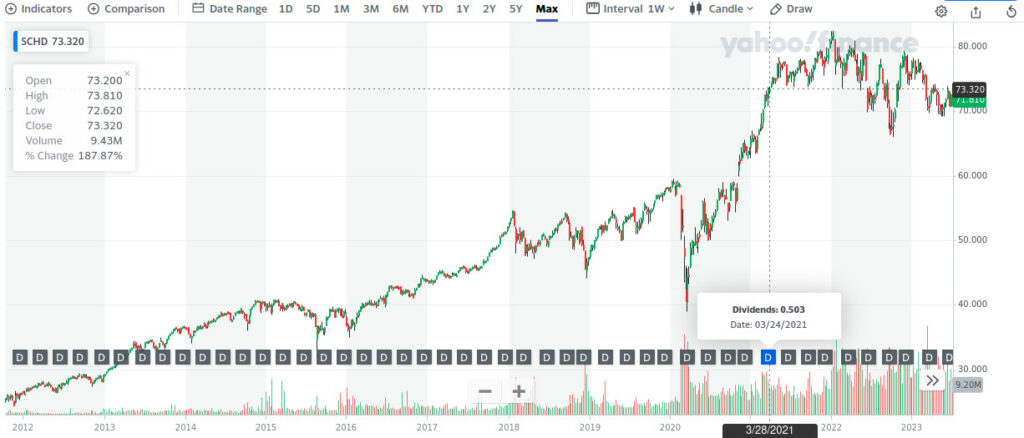
Dividend SCHD

The Benefits of Dividend Investing

  1. Steady Income: Dividend investing provides a reliable income stream, which can be particularly appealing for individuals seeking regular cash flow.
  2. Long-Term Growth Potential: Dividend-paying companies are often well-established and financially stable, providing an opportunity for long-term capital appreciation.
  3. Inflation Hedge: Dividend payments have the potential to outpace inflation, ensuring that your income retains its purchasing power over time.
  4. Portfolio Stability: Dividend stocks, especially those from different sectors, can offer stability to your investment portfolio, mitigating the impact of market volatility.
  5. Compounding Effect: Reinvesting dividends can accelerate wealth accumulation through the power of compounding.

How to Get Started with Dividend Investing

  1. Set Investment Goals: Determine your financial objectives, such as the desired income level and the timeline for achieving your goals.
  2. Research and Education: Learn about dividend investing, different types of dividend stocks, and the fundamentals of analyzing companies’ financial health.
  3. Evaluate Your Risk Tolerance: Consider your risk tolerance and investment horizon to select suitable dividend stocks.
  4. Open an Investment Account: Choose a reputable brokerage firm or platform to open an investment account that allows you to invest in dividend stocks.
  5. Allocate Funds: Decide on the amount of capital you’re willing to allocate for dividend investing.
  6. Select Dividend Stocks: Conduct thorough research and analysis to identify dividend-paying stocks that align with your investment goals.
  7. Monitor and Review: Regularly review your dividend portfolio’s performance and make adjustments as needed.

Selecting Dividend Stocks

  1. Dividend Yield: Consider the dividend yield, which is the annual dividend payment divided by the stock price. A higher yield may indicate a more attractive investment opportunity, but it’s important to assess the company’s financial stability.
  2. Dividend Growth: Look for companies that consistently increase their dividends over time, as this demonstrates their commitment to rewarding shareholders.
  3. Financial Health: Evaluate the company’s financial health, including its earnings growth, cash flow, debt levels, and dividend payout ratio.
  4. Industry and Market Trends: Assess the industry and market conditions in which the company operates to determine its long-term prospects.

Diversifying Your Dividend Portfolio

Diversification is crucial for reducing risk in dividend investing. By spreading your investments across various sectors and companies, you can mitigate the impact of a single stock’s poor performance. Consider diversifying your dividend portfolio by:

  1. Sector Allocation: Allocate your investments across different sectors, such as technology, healthcare, finance, and consumer goods.
  2. Company Size: Invest in both large-cap and small-cap dividend stocks to balance risk and potential returns.
  3. Geographical Diversity: Consider dividend stocks from different geographic regions to benefit from global economic trends.

Reinvesting Dividends for Compound Growth

Reinvesting dividends can significantly enhance your passive income over time. Instead of receiving cash payouts, you can use the dividends to purchase additional shares of the same stock or different dividend-paying stocks. This strategy harnesses the power of compounding, where your reinvested dividends generate their own dividends.

Monitoring and Adjusting Your Dividend Portfolio

Regularly monitoring your dividend portfolio is essential for maintaining its performance. Keep the following in mind:

  1. Review Dividend Payments: Stay updated on dividend payments and ensure they are consistent with your expectations.
  2. Company Performance: Continuously evaluate the financial health and performance of the companies in your portfolio.
  3. Rebalance When Necessary: Adjust your portfolio’s allocation if any particular sector or stock becomes overweight or underweight.
  4. Stay Informed: Stay updated on market and industry news that could affect your dividend investments.

Managing Risk in Dividend Investing

While dividend investing offers several benefits, it’s important to manage associated risks. Consider the following risk management strategies:

  1. Diversification: Spread your investments across different dividend stocks, sectors, and geographical regions.
  2. Research and Analysis: Conduct thorough research and analysis before investing in any dividend-paying company.
  3. Monitoring: Regularly monitor the performance of your dividend portfolio and stay informed about market conditions.
  4. Asset Allocation: Ensure your dividend investments are part of a well-diversified investment portfolio that includes other asset classes.

Tax Considerations for Dividend Income

Dividend income is generally subject to taxes. The tax treatment may vary depending on factors such as your country of residence and the type of account you hold. It’s advisable to consult with a tax professional to understand the specific tax implications related to dividend income in your jurisdiction.

Common Mistakes to Avoid in Dividend Investing

  1. Chasing High Yields: Avoid solely focusing on high dividend yields without considering the company’s financial health and sustainability of dividend payments.
  2. Lack of Diversification: Don’t put all your eggs in one basket. Diversify your dividend portfolio to reduce risk.
  3. Ignoring Fundamentals: Conduct thorough research and analysis before investing in dividend stocks, paying attention to factors such as earnings growth and financial stability.
  4. Not Reinvesting Dividends: Reinvesting dividends can significantly boost your returns over time. Avoid neglecting this powerful strategy.

Maximizing Your Passive Income with Dividend Investing

To maximize your passive income through dividend investing, consider the following tips:

  1. Focus on Dividend Growth: Look for companies with a history of consistent dividend increases.
  2. Long-Term Perspective: Adopt a long-term approach to dividend investing, benefiting from compounding and capital appreciation.
  3. Regular Portfolio Review: Regularly assess your dividend portfolio’s performance, making adjustments if necessary.
  4. Continued Learning: Stay updated on dividend investing strategies, market trends, and company news to make informed investment decisions.
  5. Seek Professional Advice: Consider consulting with a financial advisor or investment professional who specializes in dividend investing to gain additional insights and guidance tailored to your specific financial goals.

Conclusion

Dividend investing is an effective strategy for maximizing passive income. By investing in dividend-paying stocks, you can enjoy a steady stream of income, long-term growth potential, and the benefits of compounding. However, it’s crucial to conduct thorough research, diversify your portfolio, and regularly monitor your investments to mitigate risks and optimize your returns. With careful planning and a long-term perspective, you can make dividend investing a powerful tool in achieving your financial goals.

Frequently Asked Questions (FAQs)

1. How often are dividends paid? Dividends are typically paid on a quarterly basis. However, some companies may choose to distribute dividends monthly or annually.

2. Can I reinvest dividends automatically? Yes, many brokerage firms offer dividend reinvestment plans (DRIPs) that allow you to automatically reinvest your dividends into additional shares of the same stock.

3. Are dividend stocks suitable for conservative investors? Yes, dividend stocks are often favored by conservative investors due to their stable income stream and potential for long-term growth.

4. What is a dividend payout ratio? The dividend payout ratio is the percentage of a company’s earnings that are paid out as dividends to shareholders. It helps assess the sustainability of dividend payments.

5. Are dividends guaranteed? Dividends are not guaranteed. While many established companies have a track record of consistently paying dividends, they can reduce or eliminate dividends during challenging economic periods or if the company’s financial performance deteriorates.

Categories
Stock Market Investing

Top 5 Brokers For Dividend Stocks

Are you interested in investing in dividend stocks? If so, one crucial step is to choose the right dividend stock broker. A dividend stock broker plays a vital role in your investment journey, facilitating the buying and selling of dividend stocks and providing various services to help you make informed investment decisions. In this article, we will explore the importance of choosing the right dividend stock broker and discuss the factors to consider when making your selection.

Top 5 Brokers For Dividend Stocks

1. Introduction

Investing in dividend stocks can be a rewarding strategy, providing a steady income stream and potential long-term growth. However, to maximize your investment returns, it is essential to have a reliable and efficient dividend stock broker by your side. A good dividend stock broker can offer competitive fees, comprehensive research tools, and excellent customer support, among other valuable services.

Stock broker platform

2. What is a Stock Broker?

A dividend stock broker is a financial intermediary that allows investors to buy and sell dividend-paying stocks. These brokers provide a platform or an online trading account that enables investors to access various stock exchanges and trade dividend stocks. They facilitate the execution of trades and provide additional services such as market analysis, research tools, and educational resources to assist investors in making informed decisions.

3. Popular Dividend Stock Brokers

Let’s now explore some popular dividend stock brokers known for their excellent services and features:

3.1 Charles Schwab

Charles Schwab is one of the largest and most popular online brokers. It offers a wide range of features and services, including commission-free trading on stocks, ETFs, and options. Schwab also offers a variety of research tools and educational resources, making it a good choice for investors of all experience levels.

Commission-free tradingYes
Account minimum$0
Investment selectionWide
Research and toolsComprehensive
Customer serviceExcellent
Trading platformsMultiple: StreetSmart Edge, Schwab Mobile
Domestic wire transfer fee$25
Margin ratesCompetitive
Options tradingYes
Cryptocurrency tradingYes
Overall:Excellent

3.2 Fidelity

Fidelity is another large and well-respected online broker. It offers a similar range of features and services to Charles Schwab, including commission-free trading and a variety of research tools and educational resources. Fidelity also offers a number of unique features, such as its fractional share trading and its cash management account.

Commission-free tradingYes
Account minimum$0
Investment selectionWide
Research and toolsComprehensive
Customer serviceExcellent
Trading platformsMultiple: Active Trader Pro, Fidelity Mobile
Domestic wire transfer feeNone
Margin ratesCompetitive
Options tradingYes
Cryptocurrency tradingYes
OverallExcellent

3.3 E*TRADE

E*TRADE is a leading online broker that offers a wide range of features and services, including commission-free trading on stocks, ETFs, and options. E*TRADE also offers a variety of research tools and educational resources, making it a good choice for investors of all experience levels.

Commission-free tradingYes
Account minimum$0
Investment selectionWide
Research and toolsComprehensive
Customer serviceExcellent
Trading platformsMultiple: Power E*TRADE, E*TRADE Mobile
Domestic wire transfer fee$25
Margin ratesCompetitive
Options tradingYes
Cryptocurrency tradingYes
OverallExcellent

3.4 TD Ameritrade

TD Ameritrade is a leading online broker that offers a wide range of features and services, including commission-free trading on stocks, ETFs, and options. TD Ameritrade also offers a variety of research tools and educational resources, making it a good choice for investors of all experience levels.

Commission-free tradingYes
Account minimum$0
Investment selectionWide
Research and toolsComprehensive
Customer serviceExcellent
Trading platformsMultiple: thinkorswim, TD Ameritrade Mobile
Domestic wire transfer fee$25
Margin ratesCompetitive
Options tradingYes
Cryptocurrency tradingYes
OverallExcellent

3.5 Vanguard

Vanguard is a leading index fund provider that also offers a brokerage service. Vanguard’s brokerage service offers commission-free trading on stocks and ETFs, as well as a variety of research tools and educational resources. Vanguard is a good choice for investors who are looking for low-cost index funds.

Commission-free tradingYes
Account minimum$3,000
Investment selectionWide
Research and toolsComprehensive
Customer serviceExcellent
Trading platformsOne: Vanguard Mobile
Domestic wire transfer feeNone
Margin ratesCompetitive
Options tradingYes
Cryptocurrency tradingNo
OverallExcellent

When choosing a dividend stock broker, it is important to consider your needs and preferences. Some factors to consider include:

  • Commissions: Some brokers charge commissions for trading stocks, while others do not.
  • Research: Some brokers offer a variety of research tools, while others do not.
  • Educational resources: Some brokers offer a variety of educational resources, while others do not.
  • Account minimums: Some brokers have account minimums, while others do not.
  • Customer service: Some brokers have better customer service than others.

It is also important to compare the features and services of different brokers before making a decision.

4. The Importance of Choosing the Right Dividend Stock Broker

Selecting the right dividend stock broker is crucial for several reasons. Firstly, it directly impacts your investment costs. Different brokers charge varying commissions and fees for executing trades, managing accounts, and providing additional services. Opting for a broker with low fees can significantly enhance your investment returns over time.

Secondly, the quality and accessibility of research and analysis tools provided by the broker can greatly influence your investment decisions. Reliable brokers offer comprehensive research reports, stock screeners, and other analytical tools that help you evaluate dividend stocks effectively. This ensures that you make well-informed investment choices based on accurate and up-to-date information.

Another important aspect to consider is the broker’s customer service and support. Investing in dividend stocks may involve complex transactions and inquiries. A broker with responsive customer support can assist you in navigating through potential challenges, providing timely assistance and guidance when needed.

5. Factors to Consider When Choosing a Dividend Stock Broker

When evaluating different dividend stock brokers, it is crucial to consider several factors to ensure you make the right choice. Here are some key aspects to keep in mind:

5.1. Commission and Fees

One of the primary considerations is the commission and fees charged by the broker. Look for a broker that offers competitive pricing with transparent fee structures. Consider the cost per trade, account maintenance fees, and any additional charges for specific services.

5.2. Dividend Reinvestment Plans (DRIPs)

Dividend reinvestment plans allow you to automatically reinvest your dividend income back into purchasing additional shares of the same stock. Not all brokers offer DRIPs, so if this feature is important to you, ensure the broker supports it.

5.3. Research and Analysis Tools

Comprehensive research and analysis tools are essential for evaluating dividend stocks. Look for brokers that provide access to real-time market data, stock screeners, financial statements, analyst reports, and other tools to assist your investment research.

5.4. Customer Service and Support

Consider the level of customer service and support provided by the broker. Check if they offer phone, email, or live chat support and the availability of customer support during trading hours. A responsive and knowledgeable support team can be invaluable, especially during times of uncertainty or technical difficulties.

5.5. Account Types

Different investors have different needs, so it is important to consider the types of accounts offered by the broker. Whether you are an individual investor, a retirement account holder, or a corporate entity, ensure that the broker offers the account types that align with your investment goals.

5.6. Platform Usability

Evaluate the broker’s trading platform for its usability and functionality. A user-friendly platform with intuitive navigation and a wide range of order types can make your trading experience more efficient and enjoyable.

5.7. Security

Security is paramount when it comes to online trading. Choose a broker that employs robust security measures to protect your personal information and funds. Look for brokers that utilize encryption, two-factor authentication, and other security protocols to ensure a safe trading environment.

6. Conclusion

Choosing the right dividend stock broker is crucial for successful dividend investing. Consider factors such as commission and fees, research tools, customer service, account types, platform usability, and security when making your decision. By selecting a broker that aligns with your investment goals and preferences, you can optimize your dividend investing experience and work towards achieving your financial objectives.

FAQs

1. Can I trade dividend stocks with any broker?

Yes, most brokers allow you to trade dividend stocks. However, it is essential to check if the broker offers access to the specific stocks you are interested in.

2. Are dividend stocks a good investment?

Dividend stocks can be a good investment for those seeking a combination of income and potential growth. However, like any investment, it is crucial to conduct thorough research and consider your financial goals and risk tolerance.

3. Can I reinvest dividends automatically with any broker?

Not all brokers offer automatic dividend reinvestment plans (DRIPs). If this feature is important to you, ensure that the broker supports DRIPs before opening an account.

4. How do I know if a dividend stock broker is reliable?

Researching the broker’s reputation, reading customer reviews, and checking if the broker is regulated by a reputable financial authority can help determine their reliability.

5. Can I switch brokers if I’m not satisfied with my current one?

Yes, you can switch brokers if you are not satisfied with your current one. However, it is important to review the terms and conditions, potential transfer fees, and the process involved in transferring your assets to the new broker.

Categories
Stock Market Investing

How Market Volatility Affects Dividend Stocks

Investing in dividend stocks is a popular strategy for many investors seeking a stable income stream and long-term growth potential. However, market volatility can significantly impact dividend stocks, causing investors to question their investment decisions and potential returns. In this article, we will explore the relationship between market volatility and dividend stocks, understanding how they are affected and the strategies investors can employ to navigate through turbulent market conditions.

How Market Volatility Affects Dividend Stocks

Market Volatility

Understanding Market Volatility

Before delving into the impact on dividend stocks, it’s crucial to grasp the concept of market volatility. Market volatility refers to the rapid and significant price fluctuations experienced by stocks, bonds, commodities, or any other tradable asset. It is often driven by various factors, such as economic events, geopolitical tensions, or changes in investor sentiment. Volatility can create both opportunities and risks for investors, making it essential to understand its implications.

Dividend Stocks Explained

Dividend stocks are shares of companies that distribute a portion of their earnings to shareholders in the form of dividends. These stocks are typically issued by well-established companies with a history of generating stable profits. Dividend payments provide investors with a regular income stream, making them an attractive choice for income-oriented investors, retirees, and those seeking a steady cash flow.

The Relationship Between Market Volatility and Dividend Stocks

Market volatility can impact dividend stocks in several ways. Firstly, during periods of high market volatility, stock prices tend to fluctuate more widely, which can lead to increased uncertainty for investors. This volatility may cause the prices of dividend stocks to decline, negatively affecting their overall value. However, it’s important to note that dividend stocks are not solely driven by short-term market movements but also by the company’s fundamentals and dividend policies.

Impact of Market Volatility on Dividend Yields

Dividend yield, which represents the annual dividend payment as a percentage of the stock price, is a crucial metric for dividend stock investors. Market volatility can influence dividend yields in two ways. Firstly, when stock prices decline due to market volatility, dividend yields can increase as the dividend payment remains constant while the stock price decreases. On the other hand, companies facing financial challenges during economic downturns may reduce or eliminate their dividend payments, leading to lower yields.

Dividend Aristocrats: Weathering Volatility

Dividend aristocrats are companies that have consistently increased their dividend payments for at least 25 consecutive years. These companies often demonstrate strong financial health and stability, making them more resilient during market volatility. Dividend aristocrats have a track record of navigating through economic downturns and providing reliable dividend income to investors. Investing in dividend aristocrats can be a strategy to mitigate the impact of market volatility on dividend stocks.

Strategies for Investing in Dividend Stocks During Market Volatility

When investing in dividend stocks during periods of market volatility, it’s essential to adopt a strategic approach. Here are some strategies to consider:

1. Focus on Quality Companies

Investors should prioritize high-quality companies with a history of stable earnings and dividend growth. These companies are better equipped to withstand market downturns and maintain their dividend payments, even in challenging times.

2. Dollar-Cost Averaging

Dollar-cost averaging involves investing a fixed amount regularly, regardless of the stock’s price. This strategy allows investors to buy more shares when prices are low and fewer shares when prices are high, potentially reducing the impact of market volatility on the overall investment.

3. Reinvest Dividends

Reinvesting dividends can compound returns over time. By reinvesting dividends into additional shares of dividend stocks, investors can take advantage of lower prices during market downturns and potentially increase their overall investment returns in the long run.

4. Set Realistic Expectations

During periods of market volatility, it’s important to set realistic expectations for dividend stock investments. While dividends provide a steady income stream, stock prices can fluctuate significantly. Understanding that short-term market movements may not always align with dividend expectations can help investors stay focused on long-term goals.

Diversification and Risk Management

Diversification is a key risk management strategy for investors, especially during times of market volatility. By spreading investments across different asset classes, industries, and geographies, investors can reduce their exposure to individual stock or sector-specific risks. Diversification helps mitigate the impact of market volatility on dividend stocks and provides a more balanced portfolio.

Long-Term Benefits of Dividend Stocks

Despite the short-term challenges posed by market volatility, dividend stocks offer several long-term benefits. They provide a stable income stream, which can be particularly attractive for retirees or those seeking passive income. Dividend stocks also have the potential for capital appreciation and offer an opportunity to participate in the growth of well-established companies.

Case Studies: Dividend Stocks and Market Volatility

To understand the real-life impact of market volatility on dividend stocks, let’s consider two case studies:

Case Study 1: Johnson & Johnson (JNJ)

During a period of heightened market volatility, Johnson & Johnson (JNJ), a dividend-paying stock, experienced a decline in its stock price. However, the company’s strong fundamentals and consistent dividend policy helped support its share price. Investors who held onto their investment continued to receive regular dividend payments, demonstrating the resilience of dividend stocks during market volatility.

JNJ is a large-cap healthcare company that has been paying dividends for over 100 years. The company has a strong track record of earnings growth and dividend increases. In fact, JNJ has increased its dividend for 60 consecutive years, making it one of the Dividend Aristocrats.

During the COVID-19 pandemic, JNJ’s stock price declined along with the rest of the market. However, the company’s strong fundamentals and consistent dividend policy helped support its share price. JNJ’s earnings grew in 2020, and the company continued to pay its dividend without interruption.

As a result of its strong fundamentals and consistent dividend policy, JNJ’s stock price has rebounded since the pandemic. The stock is now trading near its all-time high.

JNJ is a good example of a company that can provide investors with both income and growth. The company’s strong fundamentals and consistent dividend policy make it a good investment for investors who are looking for a safe and reliable source of income.

Case Study 2: General Electric Company (GE)

General Electric Company (GE), another dividend stock, faced financial challenges during an economic downturn. In response, the company decided to reduce its dividend payments to preserve cash and navigate through the difficult market conditions. This reduction in dividends resulted in lower dividend yields and a decline in investor confidence.

GE is a large-cap conglomerate that was once one of the most valuable companies in the world. However, the company faced financial challenges in the early 2010s due to a number of factors, including the global financial crisis, the decline of its energy business, and the acquisition of Alstom.

In response to these challenges, GE reduced its dividend payments in 2017 and 2018. The company also sold off assets and restructured its business in an effort to improve its financial performance.

GE’s decision to reduce its dividend payments resulted in lower dividend yields and a decline in investor confidence. The company’s stock price fell sharply in the wake of the dividend cuts.

GE’s experience is a reminder that even the most well-established companies can face financial challenges during economic downturns. When companies face these challenges, they may need to reduce their dividend payments in order to preserve cash and navigate through the difficult market conditions. This reduction in dividends can result in lower dividend yields and a decline in investor confidence.

However, it is important to note that GE’s dividend cuts were a temporary measure. The company has since restored its dividend payments and its stock price has rebounded. This suggests that investors are willing to forgive companies that make dividend cuts when necessary.

These case studies highlight the varying effects of market volatility on dividend stocks and the importance of conducting thorough research before making investment decisions.

Common Misconceptions About Dividend Stocks and Market Volatility

There are several misconceptions surrounding dividend stocks and market volatility. Let’s address some of the common ones:

Misconception 1: Dividend Stocks Are Completely Safe

While dividend stocks offer income potential, they are not entirely risk-free. Market volatility, changes in economic conditions, and company-specific factors can impact dividend payments and stock prices.

Misconception 2: Dividend Cuts Indicate Poor Performance

Dividend cuts are not always an indication of poor company performance. During challenging economic times, companies may choose to reduce or eliminate dividends to conserve cash and ensure their long-term sustainability.

Misconception 3: High Dividend Yields Are Always Better

While high dividend yields can be attractive, investors should consider the underlying fundamentals of the company. Unsustainably high dividend yields may indicate financial instability or an upcoming dividend cut.

Tax Considerations for Dividend Stock Investors

Investors should be aware of the tax implications associated with dividend stock investments. Dividend income is typically taxable, and tax rates may vary based on the investor’s jurisdiction and income level. It’s advisable to consult with a tax professional to understand the specific tax implications of dividend stock investing.

Tools and Resources for Dividend Stock Investing

Several tools and resources can assist investors in their dividend stock investing journey:

1. Dividend Screeners

Online dividend screeners help investors identify dividend stocks based on specific criteria such as dividend yield, dividend growth rate, and payout ratio. These screeners provide valuable data and insights to support investment decisions.

2. Financial News Platforms

Keeping up with financial news platforms can provide investors with market updates, company earnings reports, and insights into dividend announcements or changes. Staying informed is crucial for making informed investment decisions.

3. Dividend Investing Books and Blogs

There are numerous books and blogs dedicated to dividend investing that provide valuable information, strategies, and case studies. These resources can help investors deepen their knowledge and refine their dividend stock investing approach.

Conclusion

Market volatility can have a significant impact on dividend stocks, but understanding the relationship between the two is crucial for investors. By focusing on quality companies, employing strategic investment approaches, and considering the long-term benefits of dividend stocks, investors can navigate market volatility while aiming for stable income and potential growth. Diversification, managing expectations, and staying informed are key elements of successful dividend stock investing.

FAQs

Q1: Can dividend stocks provide a reliable income stream during market volatility?

Yes, dividend stocks can provide a reliable income stream during market volatility. However, investors should consider the financial health of the company, its dividend history, and the potential impact of market conditions on the company’s ability to sustain dividend payments.

Q2: Should I prioritize dividend yield over dividend growth when investing in dividend stocks?

It depends on your investment goals and risk tolerance. High dividend yields may be attractive, but companies with sustainable dividend growth can provide long-term value. Balancing both yield and growth is often a prudent strategy.

Q3: Are dividend stocks suitable for all types of investors?

Dividend stocks can be suitable for various types of investors, including income-oriented investors, retirees, and those seeking a combination of income and growth. However, investors should assess their risk tolerance, investment horizon, and financial goals before investing in dividend stocks.

Q4: How often do companies increase their dividend payments?

Companies can increase their dividend payments annually, quarterly, or at other intervals, depending on their dividend policy and financial performance. Dividend aristocrats, as mentioned earlier, are companies that have consistently increased their dividends for at least 25 consecutive years.

Q5: What are some key factors to consider when evaluating dividend stocks during market volatility?

When evaluating dividend stocks during market volatility, key factors to consider include the company’s financial stability, dividend history, payout ratio, sector performance, and the potential impact of economic conditions on the company’s operations. Thorough research and analysis are crucial for making informed investment decisions.

Categories
Stock Market Investing

Understanding Dividend Cuts and Risks

Dividends are a popular way for investors to generate income from their investments. Many investors rely on the steady flow of dividend payments to support their financial goals. However, there are instances when companies may reduce or cut their dividend payouts, leading to unexpected financial challenges for investors. In this article, we will explore the concept of dividend cuts, understand the reasons behind them, analyze their impact on investors, and discuss strategies for managing the associated risks.

Understanding Dividend Cuts and Risks

Dividend money cut

Introduction

Dividends are a portion of a company’s profits distributed to its shareholders. They are often seen as a reward for investors who have invested in a company’s stock. Dividend cuts occur when a company reduces or suspends its dividend payments. While dividend cuts can happen for various reasons, they can significantly affect investors who rely on these payouts as a source of income.

What Are Dividend Cuts?

Dividend cuts refer to the reduction or elimination of dividend payments made by a company to its shareholders. When a company faces financial challenges, it may choose to cut dividends as a way to conserve cash or redirect funds towards other areas of its business. Dividend cuts can be temporary or permanent, depending on the company’s financial situation and future prospects.

Reasons for Dividend Cuts

There are several reasons why companies decide to cut their dividends. Some common reasons include:

1. Financial Difficulties

Companies facing financial difficulties, such as declining revenue, high debt levels, or economic downturns, may choose to cut dividends to strengthen their financial position. By conserving cash, these companies aim to address immediate challenges and improve their long-term viability.

2. Business Restructuring

During times of significant business restructuring, companies may prioritize reinvesting profits into their operations instead of distributing them as dividends. This strategy allows companies to adapt to changing market conditions, invest in research and development, or pursue mergers and acquisitions.

3. Regulatory Constraints

Companies operating in highly regulated industries may face restrictions on dividend distributions. Regulatory bodies may require these companies to maintain a certain level of capital or liquidity, limiting their ability to pay dividends.

4. Unpredictable Market Conditions

Market volatility and economic uncertainties can impact a company’s ability to sustain its dividend payments. Companies may opt for dividend cuts to navigate through challenging market conditions and ensure their long-term financial stability.

Impact of Dividend Cuts on Investors

Dividend cuts can have significant implications for investors, especially those who rely on dividend income as part of their investment strategy. The following are some key impacts of dividend cuts:

1. Reduced Income Stream

Investors relying on dividend income may experience a sudden reduction in their cash flow. This can be particularly challenging for retirees or individuals depending on dividends to cover living expenses or fund other financial goals.

2. Decreased Stock Value

Dividend cuts can negatively affect a company’s stock price. When dividend cuts are announced, it often signals to investors that the company is facing financial difficulties or that its future prospects may be uncertain. As a result, the stock price may decline, potentially leading to capital losses for investors.

3. Loss of Investor Confidence

Dividend cuts can erode investor confidence in a company. Shareholders may interpret dividend cuts as a lack of trust in the company’s ability to generate sustainable profits or manage its financial affairs effectively. This loss of confidence can lead to a sell-off of the company’s stock, further exacerbating the decline in its value.

Identifying the Warning Signs

To minimize the impact of dividend cuts, investors should be vigilant in identifying the warning signs that may indicate a company’s financial challenges. Some key warning signs include:

1. Declining Earnings

A persistent decline in a company’s earnings over multiple quarters may suggest financial instability. Falling earnings can make it difficult for a company to sustain its dividend payments, potentially increasing the likelihood of a dividend cut.

2. High Debt Levels

Companies with excessive debt burdens may struggle to generate sufficient cash flow to support dividend payments. Investors should assess a company’s debt-to-equity ratio and monitor any significant changes that could impact its ability to sustain dividends.

3. Unfavorable Industry Trends

Changes in industry dynamics or technological disruptions can negatively impact a company’s profitability. Investors should stay informed about industry trends and assess how they may affect a company’s ability to maintain its dividends.

4. Dividend Payout Ratio

The dividend payout ratio measures the proportion of a company’s earnings paid out as dividends. A consistently high payout ratio may indicate that a company is distributing more in dividends than it can afford. This unsustainable practice could lead to dividend cuts in the future.

Managing Risks Associated with Dividend Cuts

While dividend cuts can be challenging for investors, there are strategies to manage the associated risks effectively. Here are some key approaches:

1. Diversification as a Risk Mitigation Strategy

Diversifying your investment portfolio across different asset classes, sectors, and geographic regions can help reduce the impact of dividend cuts from individual companies. By spreading investments, you minimize reliance on any single company’s dividends.

2. Importance of Fundamental Analysis

Conducting thorough fundamental analysis is essential to assess a company’s financial health and stability. Analyzing factors such as revenue trends, profitability, debt levels, and cash flow can provide insights into a company’s ability to sustain its dividends.

3. Understanding Company Financials

Investors should have a solid understanding of a company’s financial statements, including balance sheets, income statements, and cash flow statements. By analyzing these financial reports, investors can gain valuable insights into a company’s financial position and assess its ability to maintain dividend payments.

4. Analyzing Dividend History

Reviewing a company’s dividend history can help investors assess its track record of dividend payments and identify any patterns or trends. Companies with a consistent dividend track record may be more likely to prioritize dividend payments even during challenging times.

5. Monitoring Market Conditions

Staying informed about market conditions, economic indicators, and industry trends is crucial in assessing the potential risks of dividend cuts. By monitoring these factors, investors can make more informed decisions about their investment strategies and adjust their portfolios accordingly.

Reacting to Dividend Cuts

When faced with a dividend cut from an investment, investors should carefully consider their options and take appropriate actions. Here are some strategies for dealing with dividend cuts:

1. Assess the Company’s Future Prospects

Evaluate the company’s overall financial health and its prospects for recovery. Determine if the dividend cut is a temporary measure or indicative of deeper issues. This assessment will help you make an informed decision about whether to continue holding the stock or consider selling.

2. Reallocate Funds

If a dividend cut significantly impacts your income stream, you may need to reallocate your funds to other income-generating investments or explore alternative sources of passive income. This could involve diversifying into other dividend-paying stocks or exploring fixed-income investments.

3. Seek Professional Advice

Consulting with a financial advisor or investment professional can provide valuable insights and guidance in navigating the challenges of dividend cuts. They can help you assess your investment goals, adjust your portfolio, and explore alternative investment strategies to mitigate the impact of dividend cuts.

4. Long-Term Perspective

Maintaining a long-term perspective is crucial when dealing with dividend cuts. Recognize that short-term fluctuations and challenges are part of investing. Evaluate the company’s ability to adapt and recover, and consider the potential for future dividend growth before making any hasty decisions.

Conclusion

Understanding dividend cuts and the associated risks is essential for investors who rely on dividends for income or as part of their investment strategy. By identifying warning signs, managing risks through diversification and fundamental analysis, and reacting appropriately to dividend cuts, investors can navigate the challenges and make informed decisions to protect their financial interests.

FAQs

Q1: Can dividend cuts be predicted in advance?

Dividend cuts can sometimes be predicted by assessing a company’s financial health, industry trends, and other warning signs. However, predicting dividend cuts with absolute certainty is challenging, as they can be influenced by various factors.

Q2: What alternatives exist for income investors when faced with dividend cuts?

Income investors facing dividend cuts can explore alternative income-generating investments, such as bonds, real estate investment trusts (REITs), or dividend-focused exchange-traded funds (ETFs). These options can provide a diversified income stream and potentially mitigate the impact of dividend cuts.

Q3: Are dividend cuts always a negative sign for a company?

Dividend cuts are not always a negative sign for a company. In some cases, companies may choose to cut dividends to redirect funds towards growth opportunities or address short-term financial challenges. It is crucial to evaluate the reasons behind the dividend cut and the company’s long-term prospects.

Q4: Should I sell my shares immediately after a dividend cut?

The decision to sell shares after a dividend cut depends on several factors, such as the company’s financial health, future prospects, and your investment goals. It is advisable to assess the situation carefully, seek professional advice, and consider the long-term potential before making any selling decisions.

Q5: How can diversification help mitigate the impact of dividend cuts?

Diversification involves spreading investments across different asset classes and sectors. By diversifying your portfolio, you reduce your reliance on any single company’s dividends. If one company cuts its dividend, the impact on your overall income stream is minimized by the other dividend-paying investments in your portfolio.