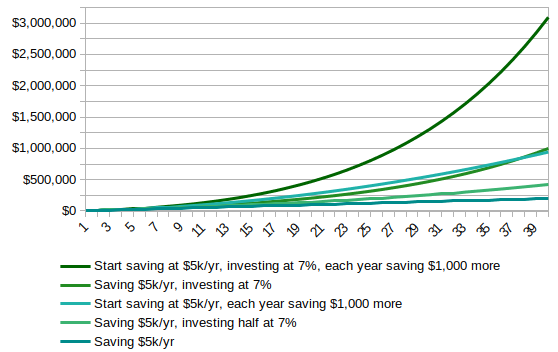
Investing in index funds is a simple and cost-effective way to diversify your investment portfolio and potentially earn long-term returns.
Warren Buffet, one of the most successful investors of all time, is a strong advocate for index fund investing. In a 2013 interview with CNBC, Buffet stated that “for the great majority of investors, therefore, a low-cost S&P 500 index fund will prove the better choice” over actively managed mutual funds. Buffet has also said that he believes index fund investing is a “terrific” way for most people to save for retirement.
Buffet’s endorsement of index fund investing is based on the idea that it’s difficult for individual investors or even professional fund managers to consistently outperform the broader market over the long term. By investing in a low-cost index fund that tracks the performance of a broad market index, investors can potentially earn returns that are similar to the overall market, without having to try to pick individual stocks or actively manage a portfolio.
Charlie Munger, the business partner of Warren Buffet, has also expressed his support for index fund investing. In a 2017 interview with CNBC, Munger stated that “I think if you’re intelligent, you’ll buy a very low-cost index fund.” Like Buffet, Munger believes that it’s difficult for individual investors or even professional fund managers to consistently outperform the broader market over the long term. By investing in a low-cost index fund that tracks the performance of a broad market index, investors can potentially earn returns that are similar to the overall market, without having to try to pick individual stocks or actively manage a portfolio.
Munger has also said that he believes index fund investing is a “no-brainer” for most people and that “if you’re not an expert, you’re going to do very well” with index fund investing. However, it’s important to note that Munger’s endorsement of index fund investing is not a guarantee of future performance and that investing in index funds carries some level of risk, like any other investment. Nonetheless, Munger’s endorsement highlights the potential benefits of index fund investing as a simple and cost-effective way to diversify your portfolio and potentially earn long-term returns.
It’s important to note that Buffet’s endorsement of index fund investing is not a guarantee of future performance and that investing in index funds carries some level of risk, like any other investment. However, Buffet’s endorsement highlights the potential benefits of index fund investing as a simple and cost-effective way to diversify your portfolio and potentially earn long-term returns.
Here’s how to get started:
- Determine your investment goals: Before you start investing in index funds, it’s important to have a clear understanding of your financial goals. Do you want to save for retirement, buy a house, or simply grow your wealth over time? Knowing your goals will help you determine the right mix of investments for your portfolio.
- Understand the basics of index funds: Index funds are investment vehicles that track the performance of a specific market index, such as the S&P 500 or the Dow Jones Industrial Average. Rather than trying to pick individual stocks or actively manage a portfolio, index funds simply follow the index and offer investors a low-cost way to diversify their investments.
- Choose an index fund: There are many different index funds to choose from, each with its own specific focus. For example, you can invest in an index fund that tracks the S&P 500, which is made up of 500 of the largest publicly traded companies in the United States, or you can invest in an index fund that tracks a specific sector of the market, such as technology or healthcare.
- Decide on your allocation: Once you’ve chosen an index fund, you’ll need to decide on your allocation, or the percentage of your investment portfolio that you want to allocate to the index fund. This will depend on your investment goals, risk tolerance, and overall financial situation.
- Open a brokerage account: In order to invest in index funds, you’ll need to open a brokerage account with a financial institution or online broker. This will allow you to buy and sell investments, including index funds, online.
- Begin investing: Once you’ve opened a brokerage account and chosen your index fund, you can begin investing by purchasing shares of the fund. You can choose to make one-time purchases or set up automatic investments on a regular basis.
It’s important to note that investing in index funds, like any other investment, carries some level of risk. It’s always a good idea to do your research and consult with a financial advisor before making any investment decisions. With a little bit of planning and due diligence, however, index funds can be a smart and straightforward way to diversify your portfolio and achieve your long-term financial goals.
What are the benefits of index funds?
- Diversification: One of the biggest benefits of index funds is that they offer investors instant diversification. Because index funds track a specific market index, they give investors exposure to a wide range of companies and industries. This can help to reduce the overall risk of your investment portfolio.
- Low costs: Index funds typically have lower fees than actively managed mutual funds. This is because they don’t require a team of fund managers to constantly research and select individual stocks. As a result, index fund investors can keep more of their returns.
- Professional management: Index funds are managed by professionals who are responsible for tracking the performance of the underlying market index and making sure the fund stays aligned with it. This takes the burden off of individual investors to constantly monitor and adjust their portfolios.
How do I choose an index fund?
When choosing an index fund, it’s important to consider your investment goals and risk tolerance. Some factors to consider include:
- Market focus: What market or sector does the index fund track? For example, if you’re interested in tech companies, you might consider an index fund that tracks the NASDAQ.
- Expense ratio: The expense ratio is the annual fee that the fund charges for its management and operation. A lower expense ratio means that you’ll pay less in fees, which can help to boost your returns.
- Minimum investment: Some index funds have minimum investment requirements, which can be a barrier for some investors. Make sure to check the minimum investment amount before choosing a fund.
- Past performance: It’s always a good idea to review the past performance of an index fund before investing. While past performance is not necessarily indicative of future results, it can give you an idea of how the fund has performed in different market conditions.
Once you’ve considered these factors, you can use online tools or consult with a financial advisor to help you choose the right index fund for your investment portfolio.
Here are a few examples of popular index funds and their ticker symbols:
- S&P 500 index fund: This index fund tracks the S&P 500, which is made up of 500 of the largest publicly traded companies in the United States. Some popular S&P 500 index funds include:
- Vanguard 500 Index Fund (VFIAX)
- Schwab S&P 500 Index Fund (SWPPX)
- Fidelity 500 Index Fund (FXAIX)
- Total stock market index fund: This type of index fund tracks the performance of the entire U.S. stock market, rather than just the S&P 500. Some popular total stock market index funds include:
- Vanguard Total Stock Market Index Fund (VTSAX)
- Schwab Total Stock Market Index Fund (SWTSX)
- Fidelity Total Market Index Fund (FSTMX)
- International index fund: This type of index fund tracks the performance of stocks in foreign markets. Some popular international index funds include:
- Vanguard FTSE Developed Markets Index Fund (VEA)
- Schwab International Index Fund (SWISX)
- Fidelity International Index Fund (FSIIX)
These are just a few examples of the many index funds that are available. It’s important to do your own research and consider your investment goals and risk tolerance before choosing an index fund. You can also consult with a financial advisor for guidance.
Exchange-traded funds (ETFs) and index funds are similar in that they both track a specific market index or sector and offer investors a low-cost way to diversify their investments. However, there are a few key differences between the two:
- Structure: ETFs are structured as a collection of securities that trade on an exchange, similar to stocks. Index funds, on the other hand, are structured as mutual funds and are bought and sold directly through the fund company or a broker.
- Trading: ETFs can be bought and sold throughout the day on an exchange, just like stocks. Index funds, on the other hand, are only bought and sold at the end of the trading day, based on the fund’s net asset value (NAV).
- Minimum investment: Some ETFs have minimum investment requirements, while others do not. Index funds may also have minimum investment requirements, depending on the fund.
- Fees: Both ETFs and index funds typically have low fees, but ETFs may have slightly lower expense ratios on average. However, it’s important to compare the fees of individual funds before making a decision.
Ultimately, the choice between an ETF and an index fund will depend on your investment goals, risk tolerance, and financial situation. Both types of investments can be effective tools for diversifying a portfolio, but it’s always a good idea to do your own research and consult with a financial advisor before making a decision.
Here are a few examples of popular ETFs:
- S&P 500 ETF: Some popular ETFs that track the S&P 500 include:
- SPDR S&P 500 ETF (SPY)
- iShares Core S&P 500 ETF (IVV)
- Vanguard S&P 500 ETF (VOO)
- Total stock market ETF: Some popular ETFs that track the total stock market include:
- Vanguard Total Stock Market ETF (VTI)
- iShares Core S&P Total U.S. Stock Market ETF (ITOT)
- Schwab U.S. Broad Market ETF (SCHB)
- International ETF: Some popular ETFs that track foreign markets include:
- Vanguard FTSE Developed Markets ETF (VEA)
- iShares MSCI EAFE ETF (EFA)
- Schwab International Equity ETF (SCHF)
Again, these are just a few examples of the many ETFs that are available. It’s important to do your own research and consider your investment goals and risk tolerance before choosing an ETF. You can also consult with a financial advisor for guidance.
I hope this helps! If you have any additional questions, don’t hesitate to ask.